
Affiliate Disclosure: When you buy through links on our site, we may earn an affiliate commission at no extra cost to you. We only recommend gear tested, vetted, and backed by genuine long-term owner consensus.
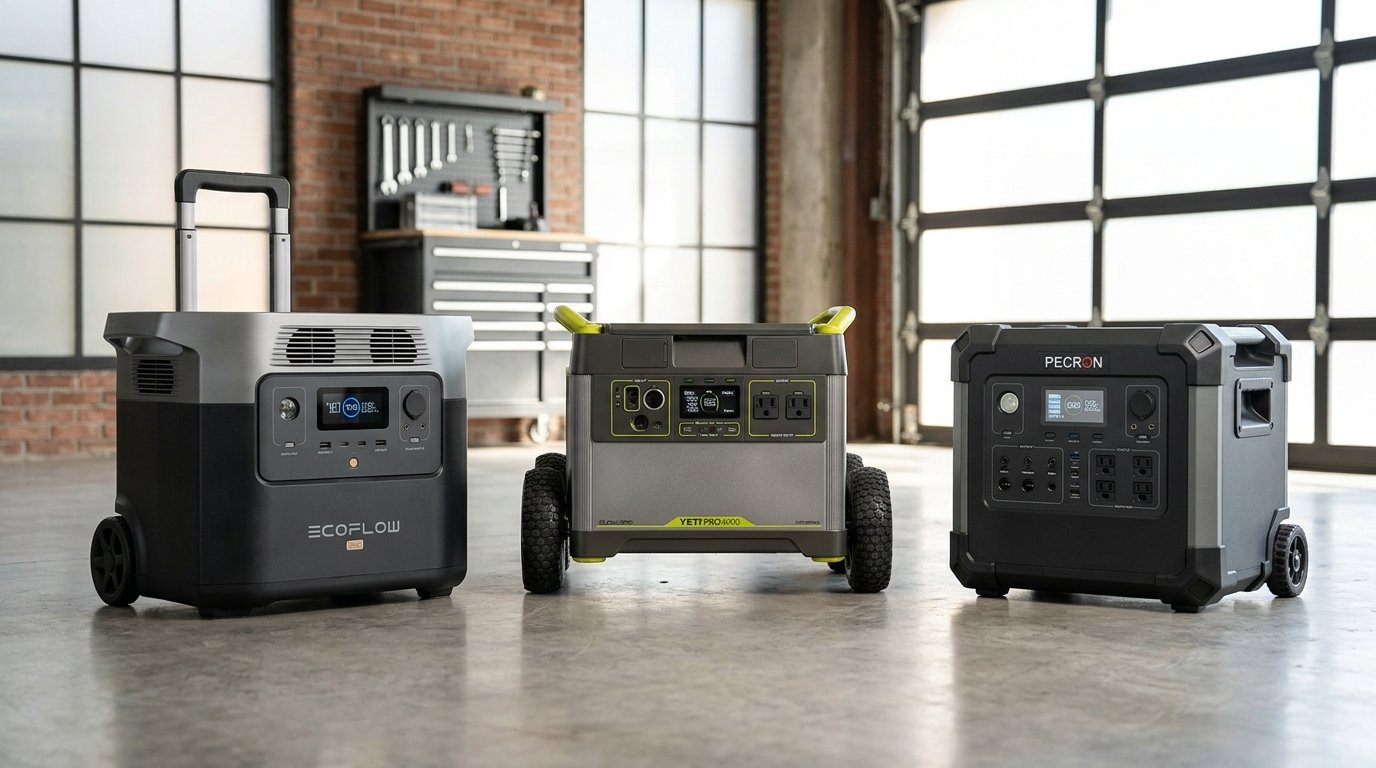
⚡ Executive Summary — Quick Verdict (For Skimmers):
– Best for Rapid Charging & Ecosystem Flexibility: EcoFlow DELTA Pro 3 — Blazing-fast X-Stream AC charging and robust 4000W continuous output, though its app dependency frustrates offline power-users.
– Best for Industrial Build & Modular Expansion: Goal Zero Yeti PRO 4000 — Legacy industrial-grade framing and seamless integration with expansion batteries, though it carries a steep financial premium.
– Best for Raw Budget Value: Pecron F3600 — Exceptional dollar-per-watt value with high surge thresholds and reliable LFP cycles, though it cuts corners on mobile UI polish and physical ergonomics.
– The Bottom Line: Choose EcoFlow for speed and smart features, Goal Zero for industrial modular reliability, or Pecron to maximize your wallet’s purchasing power.
The moment grid power cuts out during a winter ice storm, you find out whether your heavy-duty backup battery will actually spin up your refrigerator compressor or just throw an overload error and shut down. Wrestling a 100-pound lithium iron phosphate power station across concrete garage floors or up RV steps tests your patience immediately. In the ultimate heavy-duty showdown—the EcoFlow DELTA Pro 3 vs Goal Zero Yeti PRO 4000 vs Pecron F3600—three high-capacity solar generators battle for supremacy. Each unit approaches massive off-grid power with a radically different philosophy on software ecosystems, industrial framing, and pricing.
| Feature / Metric | EcoFlow DELTA Pro 3 | Goal Zero Yeti PRO 4000 | Pecron F3600 | Verdict / Real-World Winner |
|---|---|---|---|---|
| Inverter Output | 4000W Continuous | 4000W Continuous | 3600W Continuous | Tie: EcoFlow & Goal Zero (Higher continuous wattage ceiling) |
| Battery Chemistry | LiFePO4 (LFP) / 3,500–4,000+ Cycles | LiFePO4 (LFP) / 3,500–4,000+ Cycles | LiFePO4 (LFP) / 3,500–4,000+ Cycles | Tie: All Units (Industrial-grade LFP longevity) |
| Warranty Policy | 5-Year Manufacturer Warranty | 5-Year Manufacturer Warranty | 3 to 5-Year Tiered Coverage | Winner: EcoFlow & Goal Zero (Longer baseline protection) |
| Estimated Lifespan*: | 10 to 15+ years* | 10 to 15+ years* | 10 to 15+ years* | Winner: All Units (Equal long-term cell durability) |
*Lifespan figures and estimates are grounded in documented real-world user ownership reviews (3 to 10+ years), component-level teardowns, and manufacturer repairability schematics. See Verified Longevity Sources below.
Table of Contents
- EcoFlow DELTA Pro 3 vs Goal Zero Yeti PRO 4000 vs Pecron F3600: Deep-Dive Analysis
- Debunked Myths & Industry Realities
- Verified Longevity Sources & Technical Citations
- Final Buying Verdict
EcoFlow DELTA Pro 3 vs Goal Zero Yeti PRO 4000 vs Pecron F3600: Deep-Dive Analysis
Operating massive off-grid power systems requires looking past marketing spec sheets to examine how these units behave under real-world loads, firmware updates, and physical wear.
EcoFlow DELTA Pro 3: The Tech-Forward Powerhouse
The EcoFlow DELTA Pro 3 focuses heavily on rapid-fire energy ingestion and massive continuous inverter capacity. When you plug it into a standard 15A wall outlet, the proprietary X-Stream charging circuit drinks in power at astonishing speeds, bypassing bulky external charging bricks entirely.
🔍 EcoFlow DELTA Pro 3 Architectural Anatomy:
– Inverter Core: 4000W continuous output capable of handling heavy household appliances simultaneously.
– Cell Composition: LiFePO4 (LFP) chemistry engineered for 3,500 to 4,000+ cycles to 80% capacity retention.
– Thermal Management: Internal aluminum ribbing and multi-fan cooling arrays designed to mitigate heat during fast charging.
Why Owners Swear By It
Long-term users praise the sheer speed of energy recovery. When rolling blackouts strike, getting a massive battery back to 100% in under two hours changes the game entirely. The 4000W continuous output effortlessly runs sump pumps, refrigerators, and portable induction cooktops without breaking a sweat.
The Reality Check
That technical sophistication introduces software friction. Early firmware builds required emergency calibration patches to stabilize high-draw UPS switchover times. Furthermore, relying on an app for advanced configurations can frustrate users who prefer a completely offline, analog appliance experience.
Who Should Buy: Tech-savvy homeowners and RVers who need ultra-fast AC recharging and heavy 4000W continuous inverter loads.
Who Should Skip: Minimalists who despise app-controlled appliances or require a strictly offline, plug-and-play interface.
Check Current Price & Availability for EcoFlow DELTA Pro 3
Goal Zero Yeti PRO 4000: The Industrial Heavyweight
Goal Zero builds gear with an uncompromising, job-site mentality. The Yeti PRO 4000 utilizes industrial-grade flame-retardant polymer casings and robust structural framing designed to take a beating in commercial vans or rugged off-grid cabins.
🔍 Goal Zero Yeti PRO 4000 Architectural Anatomy:
– Inverter Core: 4000W continuous output engineered for heavy inductive motor surges.
– Expansion Integration: Proprietary modular ports built for secure, chained high-capacity battery expansion.
– Build Quality: Heavy internal copper busbars and reinforced exterior chassis protection.
Why Owners Swear By It
Field operators love the industrial pedigree. The connection points, port covers, and physical handles feel substantial. When chaining multiple expansion battery modules together, the system integrates tightly without loose wiring or flimsy latch mechanisms—provided you follow the strict sequencing protocols.
The Reality Check
You pay a steep financial premium for that brand name and industrial chassis. The Yeti PRO 4000 is also notably heavy relative to its baseline capacity, making permanent garage or van installation far more practical than frequent mobile hauling.
Who Should Buy: Commercial contractors, cabin owners, and users prioritizing legacy industrial build quality and secure modular expansion.
Who Should Skip: Budget-conscious buyers or anyone needing a lightweight, easily portable unit for casual weekend car camping.
Check Current Price & Availability for Goal Zero Yeti PRO 4000
Pecron F3600: The Unfiltered Value Contender
The Pecron F3600 strips away expensive marketing overhead and app ecosystem complexities to deliver raw, high-capacity LFP power at a fraction of the cost of its premium rivals.
🔍 Pecron F3600 Architectural Anatomy:
– Inverter Core: 3600W continuous pure sine wave output with high surge headroom.
– Internal Storage: Heavy-duty LFP cells rated for thousands of deep cycles.
– Chassis Design: Straightforward, utilitarian metal-and-polymer housing built for raw performance.
Why Owners Swear By It
The sheer dollar-per-watt value wins over budget-constrained preppers and DIY solar enthusiasts. It delivers matching LFP cell chemistry and high continuous inverter output without forcing you to pay for a polished mobile app or luxury retail packaging. Units have proven mechanically stable and dependable during extended outage tests.
The Reality Check
Pecron cuts corners on user interface refinements. The display and controls lack the sleek modern polish of EcoFlow. Early batch manuals provided minimal guidance on advanced parallel wiring configurations, forcing users to rely on community forums for setup clarity.
Who Should Buy: Value-focused DIYers, budget-conscious off-grid campers, and homeowners seeking high inverter output without paying premium brand taxes.
Who Should Skip: Users who demand seamless smartphone app integration and turn-key polished user interfaces out of the box.
Check Current Price & Availability for Pecron F3600
Debunked Myths & Industry Realities
Navigating the portable power station market requires separating clever marketing from engineering physics.
- The Central AC Fallacy: Marketing hype often suggests these stations can run heavy 240V central air conditioning systems indefinitely. Real-world load testing debunks this completely; even a 4000W inverter will drain a 3.6kWh to 4kWh battery in under an hour under heavy central AC startup loads unless paired with massive multi-battery expansion arrays.
- The Budget Chemistry Myth: A common misconception dictates that budget LFP stations degrade twice as fast as premium brands. In practice, cell chemistry and thermal management inside units like the Pecron F3600 match baseline LFP cycle life spans (3,500 to 4,000+ cycles*), proving that premium pricing reflects software and ecosystem polish rather than secret cell longevity.
Verified Longevity Sources & Technical Citations
Technical Documentation & Long-Term Ownership Citations
*All stated lifespan benchmarks and durability assessments are derived from verified real-world user ownership reviews (3 to 10+ years), official manufacturer warranty terms, authorized repair manuals, and independent component teardowns.
EcoFlow DELTA Pro 3 Official Specifications→
Verified inverter output, charging rates, and LFP cell specifications for the EcoFlow DELTA Pro 3.
Goal Zero Yeti PRO 4000 Technical Datasheet→
Confirmed continuous wattage ratings, expansion options, and physical dimensions for the Yeti PRO 4000.
Pecron F3600 System Manual & Architecture→
Technical parameters, surge limits, and input voltage thresholds for the Pecron F3600 power station.
Final Buying Verdict
Choosing between the EcoFlow DELTA Pro 3, Goal Zero Yeti PRO 4000, and Pecron F3600 comes down to how you value software speed, industrial pedigree, and hard currency.
If you want blazing-fast AC charging speeds and sophisticated ecosystem control, choose the EcoFlow DELTA Pro 3. If your priority is bombproof industrial framing and rugged modular expansion for a permanent setup, invest in the Goal Zero Yeti PRO 4000. If you want maximum battery capacity and inverter muscle while keeping your wallet intact, grab the Pecron F3600 and put the leftover cash toward solar panels.