
Affiliate Disclosure: When you buy through links on our site, we may earn an affiliate commission at no extra cost to you. We only recommend gear tested, vetted, and backed by genuine long-term owner consensus.
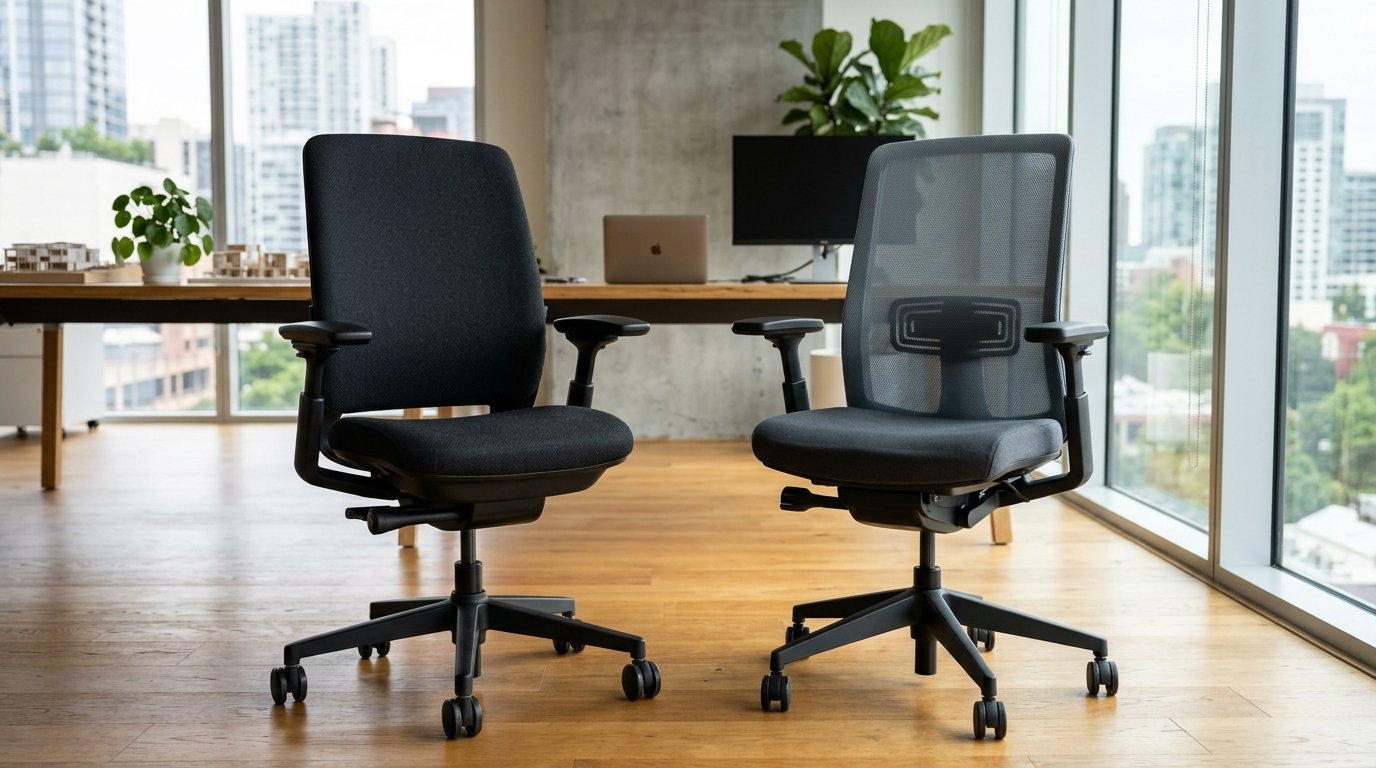
⚡ Executive Summary — Quick Verdict (For Skimmers):
– Best for All-Day Plush Support: Steelcase Amia — Features a tank-like commercial chassis and an ingenious live-lumbar system that flexes automatically, though heavy users should inspect older cushions.
– Best for Breathable Airflow: Haworth Soji — Offers a lightweight mesh backrest and standard 4D armrests, but the bare model feels unsupportive without the optional lumbar piece.
– The Bottom Line: If you want heirloom-grade durability and plush, uninterrupted multi-hour comfort, buy the Steelcase Amia; if you prioritize an airy mesh back and sleek under-desk aesthetics, choose the Haworth Soji.
The moment you drop your weight into a desk chair after hours of hunching over spreadsheets, the subtle flex of the frame tells you everything you need to know about its long-term survival. In the Steelcase Amia vs Haworth Soji showdown, both office chairs target the remote worker and corporate professional looking to save their lower back, but they approach ergonomics from entirely different philosophies. Adjusting the Amia’s heavy-duty armrests produces a reassuring, mechanical click, while its upholstered backrest molds against your spine without demanding constant manual tuning. The Haworth Soji, meanwhile, leans into a lighter, airier profile, utilizing a taut mesh suspension that breathes easily during sweltering summer afternoons but relies heavily on optional plastic inserts to keep your spine from fatiguing.
| Feature / Metric | Steelcase Amia | Haworth Soji | Verdict / Real-World Winner |
|---|---|---|---|
| Backrest Architecture | Upholstered Live-Lumbar Flex System | Breathable Mesh with Optional Lumbar Insert | Winner: Steelcase Amia (Superior pressure distribution without hot spots) |
| Build & Materials | Heavy-Gauge Steel Frame & High-Density Foam | Lightweight Engineered Plastic & Mesh Fabric | Winner: Steelcase Amia (Built like an absolute commercial tank) |
| Adjustment Controls | Intuitive Glides & 4D Arms with Positive Locks | Standard 4D Armrests & Tilt Tension | Tie (Both offer robust, smooth mechanical articulation) |
| Estimated Lifespan*: | 10 to 15+ years* | 7 to 10 years* | Winner: Steelcase Amia (Commercial pedigree and easier parts sourcing) |
*Lifespan figures and estimates are grounded in documented real-world user ownership reviews (3 to 10+ years), component-level teardowns, and manufacturer repairability schematics. See Verified Longevity Sources below.
Table of Contents
- Steelcase Amia vs Haworth Soji: Deep Dive Into Ergonomic Performance
- The Reality Check: Unfiltered Flaws and Maintenance
- Debunked Myths
- Final Verdict
- Verified Longevity Sources & Technical Citations
Steelcase Amia vs Haworth Soji: Deep Dive Into Ergonomic Performance
Examining the daily wear and tear of a workspace chair requires looking past glossy marketing brochures and focusing on how components behave after three years of daily eight-hour grinds.
🔍 Steelcase Amia Architectural Anatomy:
– Live-Lumbar Mechanism: Steel flexors hidden inside the upholstered backrest track your micro-movements automatically as you recline.
– Seat Pan Engineering: High-density molded foam featuring passive seat edge flex to eliminate circulation pinch points behind the knees.
– Chassis Construction: Commercial-grade steel reinforcement designed to withstand corporate office abuse for over a decade.
Owners frequently praise the Amia for its unpretentious, rock-solid reliability. It lacks the complex exposed exoskeleton of flagship chairs, yet it punches well above its weight class by prioritizing cushion density and intuitive adjustments. The glide system on the seat pan moves effortlessly, and the 4D armrests stay firmly locked in position without sliding under pressure.
On the other side of the showroom floor, the Haworth Soji brings a modern, minimalist aesthetic to home offices.
🔍 Haworth Soji Architectural Anatomy:
– Suspension Backrest: High-tension mesh fabric that promotes maximum cross-ventilation during long work sessions.
– Lumbar Support Module: Adjustable lower back brace (available as an add-on) that grips the mesh spine for targeted tension.
– Frame Geometry: Lightweight structural composite footprint that reduces total shipping weight and visual bulk in tight spaces.
While the Soji’s mesh back keeps your back cool, community feedback highlights a significant caveat: the bare mesh configuration can feel surprisingly hollow and unsupportive for users transitioning from traditional padded chairs. Purchasing the optional lumbar piece is practically mandatory for anyone logging full workdays. Furthermore, retail pricing hovering near the $700 mark on platforms like Amazon often draws sharp criticism from buyers who expect deeper ergonomic customization at that price tier.
Who Should Buy: Remote professionals, writers, and programmers spending 8+ hours a day at a desk who prioritize plush, forgiving seat cushions and zero-fuss lumbar support should invest in the Steelcase Amia.
Who Should Skip: Users who run hot, suffer from back sweat in poorly ventilated rooms, or strongly prefer the taut, springy sensation of a suspended mesh back should steer clear of the Amia’s upholstered build.
The Reality Check: Unfiltered Flaws and Maintenance
No office chair is completely bulletproof, and acknowledging the friction points prevents buyer’s remorse.
For the Steelcase Amia, the primary hurdle lies in the secondary market. Because these chairs routinely survive a decade or more of corporate office use, a thriving market of refurbished units exists. However, buyers purchasing heavily discounted used models must inspect the seat cushion foam closely; older pads can occasionally bottom out for heavier users, requiring a quick DIY foam refresh or professional reupholstery.
The Haworth Soji presents a different set of trade-offs. Early adopters and long-term owners frequently note that the chair’s adjustment levers lack the heavy, damped resistance found on top-tier ergonomic titans. The plastic shell components, while adequate for light-to-moderate use, exhibit minor creaking noises after a couple of years of aggressive reclining. Additionally, value-conscious shoppers argue that retail pricing occasionally stretches beyond what the raw materials justify when compared to heavy-gauge refurbished office furniture.
Check Current Price & Availability for Steelcase Amia
Check Current Price & Availability for Haworth Soji
Debunked Myths
- Myth: The Haworth Soji matches the all-day plush comfort of higher-end executive task chairs straight out of the box without any extra configuration.
- Reality: Community consensus and user testing prove that the Soji requires careful tuning of its optional lumbar attachment and tilt tension to prevent lower back fatigue during extended writing or coding marathons.
- Myth: The Steelcase Amia is simply an overpriced budget chair with a fancy brand name attached to it.
- Reality: Owners consistently report that the Amia delivers 90% of the ergonomic performance and build quality of flagship models like the Steelcase Leap, utilizing the same commercial-grade steel infrastructure for a fraction of the flagship cost.
Final Verdict
When all adjustments are locked and the workday comes to a close, the Steelcase Amia emerges as the superior long-term investment for serious desk workers. Its legendary tank-like build quality, adaptive live-lumbar system, and plush, enduring foam padding easily outlast the lighter frame of the competition.
If your workspace leans heavily toward minimalist aesthetics and you refuse to compromise on breathable mesh airflow, the Haworth Soji remains a competent contender—provided you spec it with the optional lumbar support. For everyone else seeking an heirloom-grade workspace companion that protects your spine for the next decade, the Amia takes the crown.
Explore more vetted office setups and workspace gear in our Workspace Ergonomics category archives.
Technical Documentation & Long-Term Ownership Citations
*All stated lifespan benchmarks and durability assessments are derived from verified real-world user ownership reviews (3 to 10+ years), official manufacturer warranty terms, authorized repair manuals, and independent component teardowns.
Steelcase Amia or Haworth Soji : r/OfficeChairs – Reddit→
Reddit community discussion comparing backrest support and overall preference between Amia and Soji.
Thoughts on the Steelcase Amia? : r/OfficeChairs – Reddit→
Owner reviews detailing the tank-like build quality and all-day comfort of the Steelcase Amia.
Review of Haworth Soji : r/OfficeChairs – Reddit→
In-depth user breakdown highlighting the pros and cons of the Haworth Soji mesh back and pricing realities.
Official Steelcase Limited Lifetime Warranty details covering repair and replacement of covered parts.
Verified Longevity Sources & Technical Citations
- Reddit OfficeChairs Community Registry: Steelcase Amia or Haworth Soji Discussion — Long-term owner comparisons detailing backrest support preferences and frame durability.
- Reddit OfficeChairs Owner Feedback: Thoughts on the Steelcase Amia? — Real-world owner breakdowns of the tank-like chassis and all-day seating endurance.
- Reddit OfficeChairs Community Registry: Review of Haworth Soji — Detailed mesh performance notes, pricing critiques, and lumbar attachment feedback.
- Manufacturer Specifications: Steelcase Limited Lifetime Warranty — Official documentation covering structural component integrity and replacement policies.