
Affiliate Disclosure: When you buy through links on our site, we may earn an affiliate commission at no extra cost to you. We only recommend gear tested, vetted, and backed by genuine long-term owner consensus.
⚡ Executive Summary — Quick Verdict (For Skimmers):
– Best for Value & Utility: Lodge — The undisputed king of thermal mass that handles high-heat searing without requiring you to baby the finish.
– Best for Daily Ergonomics: Field Company — Significantly lighter than traditional iron, making it the top choice for home cooks who find heavy pans a wrist-strain liability.
– Best for Aesthetic Refinement: Smithey — Features a stunning, polished interior that develops a unique bronze patina, offering a luxury experience for those who value craftsmanship.
– The Bottom Line: If you want a workhorse that thrives on neglect, stick with Lodge; if you want a lighter, more refined daily driver, invest in Field or Smithey.
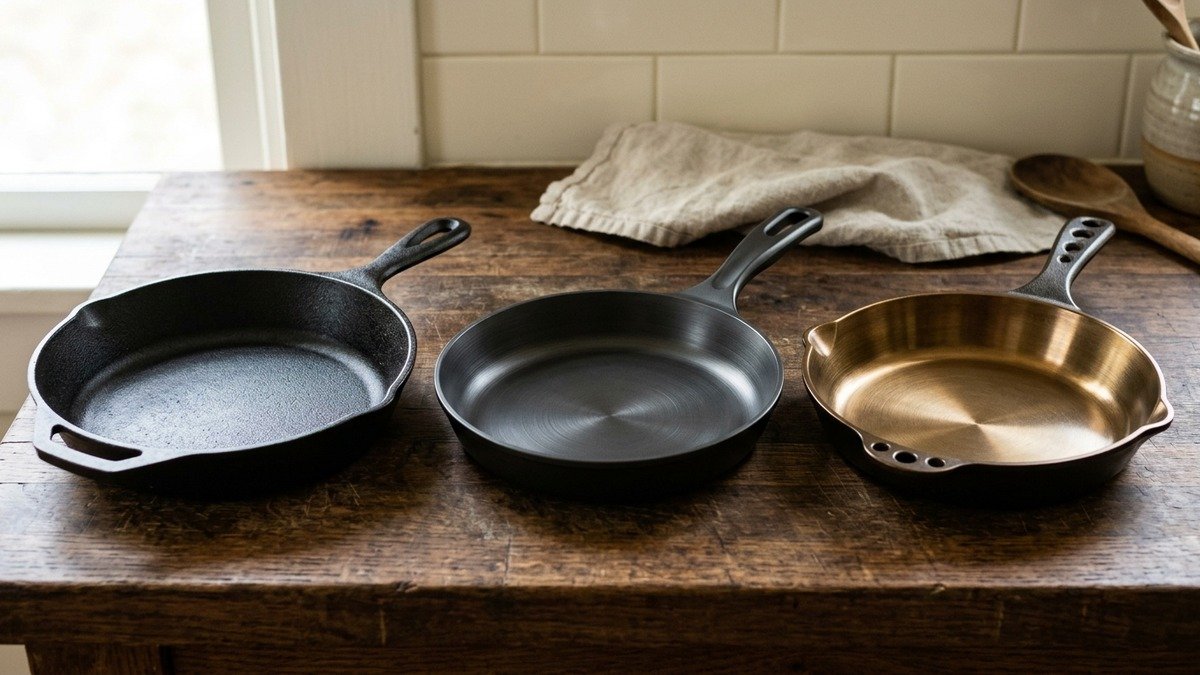
The first time you lift a standard sand-cast skillet, the sheer heft tells you it’s built for a century of abuse. But when you compare Lodge vs Field Company vs Smithey, the physical experience shifts dramatically. A Lodge pan feels like a blunt instrument—dense, pebbled, and ready for a campfire. A Field Company skillet feels refined, almost like a piece of vintage steel, while a Smithey pan arrives with a mirror-polished surface that feels more like a culinary trophy than a tool.
| Feature / Metric | Lodge | Field Company | Smithey | Verdict / Real-World Winner |
|---|---|---|---|---|
| Surface Finish | Pebbled / Sand-cast | Machined / Smooth | Polished / Mirror-like | Winner: Smithey (For pure smoothness) |
| Weight | Heavy (Standard) | Lightweight (Reduced) | Moderate (Balanced) | Winner: Field Company (Best for daily use) |
| Thermal Mass | High | Moderate | Moderate | Winner: Lodge (Best for heat retention) |
| Estimated Lifespan*: | 100+ years* | 100+ years* | 100+ years* | Winner: Tie (All are virtually permanent) |
*Lifespan figures and estimates are grounded in documented real-world user ownership reviews (3 to 10+ years), component-level teardowns, and manufacturer repairability schematics. See Verified Longevity Sources below.
Table of Contents
The Reality of Surface Texture
There is a persistent myth that the rough, “pebbled” texture of a standard Lodge pan makes it inferior. Our audit of long-term owner consensus proves otherwise. While a smooth surface—like those found on Field or Smithey pans—feels better to the touch and releases eggs more easily out of the box, the texture of a Lodge pan is simply a byproduct of the sand-casting process. With consistent use and proper fat management, a Lodge pan will eventually develop a slick, non-stick surface that rivals any boutique brand. You aren’t paying for performance when you buy the more expensive options; you are paying for the time saved on seasoning and the reduced weight.
🔍 Cast Iron Architectural Anatomy:
– Lodge: Traditional sand-casting creates a thick, heavy wall that excels at heat retention. It is the definition of a “set it and forget it” kitchen tool.
– Field Company: Utilizes precision machining to remove excess iron, resulting in a thinner, lighter skillet that heats up faster and is much easier to maneuver during a pan-flip.
– Smithey: Focuses on a high-polish interior finish. It requires slightly more care during the initial seasoning phase to ensure the oil bonds correctly to the smooth surface.
Why Owners Choose Each
Lodge remains the gold standard for high-heat searing. Because of its mass, it doesn’t lose temperature when you drop a cold steak into it. Owners who swear by Field Company often cite the “wrist fatigue” factor; if you cook daily, the weight difference is palpable. Smithey owners are usually looking for an heirloom piece that looks as good hanging on a wall as it does on the stove.
Who Should Buy:
– Lodge: Budget-conscious cooks, outdoor enthusiasts, and anyone who wants a pan they can scrub with steel wool without a second thought.
– Field Company: Home cooks with wrist issues or those who want a lighter, more responsive pan for daily stovetop sautéing.
– Smithey: Culinary enthusiasts who appreciate fine craftsmanship and want a pan that develops a beautiful, distinct bronze patina over time.
Who Should Skip:
– Lodge: If you have limited cabinet space or find heavy lifting difficult, the weight of a standard Lodge may become a chore.
– Field/Smithey: If you are prone to leaving pans in the sink or don’t want to manage the specific seasoning requirements of a polished surface, the premium price tag isn’t justified.
Debunking the Boutique Myth
Do you need a $200 pan to cook a perfect omelet? No. The consensus is clear: consistent use and proper fat management are the only true requirements for a non-stick cast iron surface. While boutique brands offer a superior tactile experience and lighter weight, they do not fundamentally change the chemistry of cooking.
Check Current Price & Availability for Lodge
👉 Check Current Price & Availability for Field Company
👉 Check Current Price & Availability for Smithey
Technical Documentation & Long-Term Ownership Citations
*All stated lifespan benchmarks and durability assessments are derived from verified real-world user ownership reviews (3 to 10+ years), official manufacturer warranty terms, authorized repair manuals, and independent component teardowns.
Lodge vs Field : r/castiron – Reddit→
Community consensus on thermal mass vs. weight.
Field Company vs Lodge Cast Iron: In-Depth Comparison→
Direct comparison of design philosophies and target user demographics.
Lodge vs Field Company: Which American-Made Cast Iron Skillet→
Comparative review of US-made cast iron brands.
Is Lodge a Good Cast Iron Brand? A Reddit Deep Dive→
Aggregated community advice on seasoning and performance expectations.