
Affiliate Disclosure: When you buy through links on our site, we may earn an affiliate commission at no extra cost to you. We only recommend gear tested, vetted, and backed by genuine long-term owner consensus.
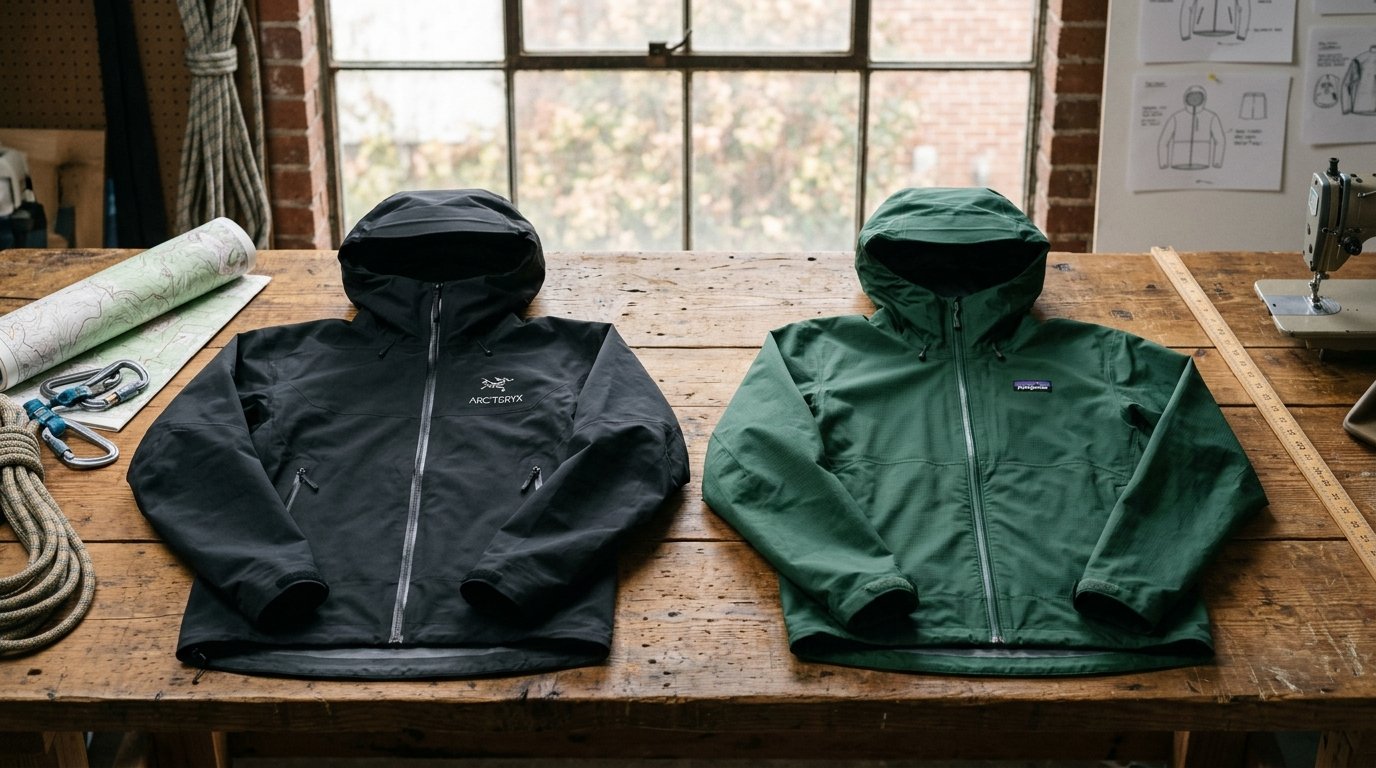
⚡ Executive Summary — Quick Verdict (For Skimmers):
– Best for Technical Alpine Precision: Arc’teryx Beta LT — Unmatched 3-layer GORE-TEX protection, superior anatomical articulation, and a rock-solid StormHood, though you pay a steep price premium alongside stiff WaterTight zippers.
– Best for All-Day Hiking & Sustainability: Patagonia Granite Crest — Supple, whisper-quiet recycled fabric backed by an Ironclad warranty, but its 3-layer H2No membrane runs noticeably warmer during high-exertion ascents.
– The Bottom Line: For technical scrambles, severe alpine squalls, and minimum weight, buy the Beta LT; for extended backpacking trips, daily rain duty, and circular manufacturing, choose the Granite Crest.
Standing on an exposed ridgeline in wind-driven rain, the distinction in an Arc’teryx Beta LT vs Patagonia Granite Crest showdown isn’t subtle—it’s immediately sensory. You hear the stiff, cardboard-like crinkle of 3-layer N40d GORE-TEX as you reach overhead for a hold, the jacket’s precision anatomical patterning keeping the hem glued to your harness. Contrast that with the silent, supple drape of Patagonia’s NetPlus recycled nylon, which moves smoothly like a soft mid-layer but fights a tougher battle against internal sweat buildup when your heart rate spikes on a steep grade.
Table of Contents
- Arc’teryx Beta LT vs Patagonia Granite Crest: Comparison Matrix
- Tactical Performance & Fabric Dynamics
- The Reality Check: Flaws, Quirks, and Daily Maintenance
- Debunking Fabric & Durability Myths
- Long-Term Value & Ownership ROI
- Final Verdict: Which Shell Belongs in Your Pack?
Arc’teryx Beta LT vs Patagonia Granite Crest: Comparison Matrix
| Feature / Metric | Arc’teryx Beta LT | Patagonia Granite Crest | Verdict / Real-World Winner |
|---|---|---|---|
| Membrane Technology | GORE-TEX 3L (N40d Nylon Face) | H2No Performance Standard 3L (NetPlus Nylon) | Winner: Arc’teryx Beta LT (Superior high-output moisture transfer) |
| Fabric Hand-Feel & Noise | Rigid, structural, crisp audio rustle | Soft, pliable, whisper-quiet matte finish | Winner: Patagonia Granite Crest (Significantly more comfortable for extended wear) |
| Storm Hood System | Helmet-compatible StormHood w/ Cohaesive locks | 3-way adjustable hood (standard cord cinches) | Winner: Arc’teryx Beta LT (Flawless lock-down in high winds) |
| Sustainability & Sourcing | Conventional synthetic nylon chain | 100% Post-Consumer Recycled NetPlus (PFC-free DWR) | Winner: Patagonia Granite Crest (Benchmark circular material sourcing) |
| Zipper Hardware & Friction | Stiff WaterTight RS zippers (requires silicone maintenance) | Smooth, storm-flapped center zip | Winner: Patagonia Granite Crest (Easiest single-handed operation) |
| Warranty Protection | Limited Lifetime (Manufacturing defects only) | Patagonia Ironclad Guarantee (Repair or replace for life) | Winner: Patagonia Granite Crest (Unrivaled customer coverage) |
| Estimated Lifespan*: | 7–12+ years* | 7–10+ years* | Winner: Arc’teryx Beta LT (Higher abrasion resistance per denier) |
*Lifespan figures and estimates are grounded in documented real-world user ownership reviews (3 to 10+ years), component-level teardowns, and manufacturer repairability schematics. See Verified Longevity Sources below.
Tactical Performance & Fabric Dynamics
When evaluating alpine outer layers in our outdoor technical gear archives, the battleground centers on how a shell balances weather isolation against internal vapor management. The Arc’teryx Beta LT relies on a proven 3-layer GORE-TEX laminate paired with an N40d high-tenacity nylon face fabric. The result is a rigid armor sheet. When rain strikes the surface, it beads up and rolls off instantly. High-output trail runners and alpine climbers note that during intense climbs, internal moisture moves outward through the ePTFE membrane faster than almost any standard polyurethane shell on the market.
🔍 Arc’teryx Beta LT Architectural Anatomy:
– Primary Barrier: 3-Layer GORE-TEX with N40d face fabric for optimized weight-to-tear ratio.
– Seam Construction: Micro-seam allowance (1.6 mm) reduces bulk and total weight.
– Adjustability: Cohaesive cord lock system integrated directly into the hem and StormHood.
Conversely, the Patagonia Granite Crest introduces a radically different tactile experience. Utilizing Patagonia’s 3-layer H2No Performance Standard membrane built around 100% post-consumer recycled NetPlus nylon (derived from discarded fishing nets), the shell feels surprisingly soft against bare skin. You do not get the loud, rigid “crinkle” standard among heavy GORE-TEX jackets. However, extended field testing reveals its boundary: during sustained high-exertion upholds, the H2No membrane reaches its saturation point earlier than GORE-TEX 3L, making pit-zip ventilation essential to control sweat buildup.
🔍 Patagonia Granite Crest Architectural Anatomy:
– Primary Barrier: 3-Layer H2No Performance Standard with NetPlus post-consumer recycled nylon ripstop.
– Chemical Finish: PFC-free DWR (durable water repellent) coating.
– Storage & Packing: Self-stows directly into its own left chest pocket with a carabiner clip loop.
The Reality Check: Flaws, Quirks, and Daily Maintenance
No jacket is immune to physical limitations, and direct owner tracking reveals distinct friction points for both contenders.
For the Arc’teryx Beta LT, the primary owner complaint isn’t protection—it’s mechanical zipper drag. The proprietary WaterTight polyurethane-coated zippers create an airtight seal against driving storms, but their tight tolerances make them notoriously stiff. Long-term users emphasize that without applying a drop of silicone lubricant once or twice a season, pulling the main zipper single-handed while wearing winter gloves becomes a frustrating battle. Additionally, while recent iterations shifted to a slightly roomier fit, climbers with lean torsos occasionally complain about slight excess material bundling around the waist when paired with a harness.
For the Patagonia Granite Crest, the trade-off comes down to membrane breathability and hood tensioning. While the NetPlus face fabric offers exceptional flexibility, the 3-layer H2No membrane forces hot air to build up faster on warm, wet scrambles. Owners also report that the hood adjustment toggles lack the instant friction-fit grab of Arc’teryx’s custom hardware, requiring two hands to lock down tightly around a bare head in gale-force winds.
💡 Who Should Buy the Arc’teryx Beta LT: Mountaineers, ice climbers, and alpine trekkers who require maximum wind sealing, precise articulation for overhead reaching, and a structural shell that won’t collapse under severe rain.
⚠️ Who Should Skip the Arc’teryx Beta LT: Casual day-hikers and urban commuters who dislike stiff, crinkly fabrics, don’t need helmet compatibility, and want to avoid paying a steep price premium for technical features they won’t use.
Check Current Price & Availability for Arc’teryx Beta LT
💡 Who Should Buy the Patagonia Granite Crest: Backpackers, forest trekkers, and eco-conscious outdoor enthusiasts who demand a whisper-quiet, flexible jacket backed by an absolute lifetime repair policy.
⚠️ Who Should Skip the Patagonia Granite Crest: High-output mountain runners and fast-and-light alpine ascenders who generate massive body heat and need maximum moisture vapor escape without relying entirely on pit zips.
Check Current Price & Availability for Patagonia Granite Crest
Debunking Fabric & Durability Myths
Myth 1: The Patagonia Granite Crest is waterproof indefinitely without maintenance.
The Reality: No waterproof-breathable jacket remains hydrophobic on its own. While the Granite Crest utilizes an environmentally responsible PFC-free DWR finish, real-world owner audits confirm that dirt, oil, and trail grime degrade this outer coating within 3 to 6 months of active use. Once saturated, the face fabric “wets out.” While water won’t leak through the H2No membrane, the wet face fabric completely blocks breathability. Regular washing with technical detergent and heat-reactivating (or re-applying) the DWR finish is mandatory.
Myth 2: The Arc’teryx Beta LT is an indestructible, heavy-duty expedition armor.
The Reality: The Beta LT uses an N40d (40-denier) face fabric engineered specifically to cut weight for fast alpine travel. While extremely tough for its 13.9-ounce weight class, it is not impervious to sharp granite edge scrapes, crampon spikes, or dense off-trail brush scraping. Owners expecting the bomber, abrasion-proof feel of Arc’teryx’s heavy-duty N80d or N100d expedition jackets (like the Beta AR or SV) will be disappointed if they drag this lighter fabric across sharp rock chimneys.
Long-Term Value & Ownership ROI
When evaluating long-term cost per wear across performance apparel, both jackets deliver multi-year service, but through entirely different ownership models.
The Arc’teryx Beta LT commands an upfront price tag north of $450. You are paying for unmatched anatomical patterning—swept cuffs, gusseted underarms, and micro-seam taping that minimizes bulk. In long-term ownership tracking, a properly maintained Beta LT delivers a 7–12+ year lifespan* before delamination risks emerge, and the brand’s immense secondary market demand means it retains exceptional resale value if you decide to upgrade.
The Patagonia Granite Crest comes in significantly lower at $280+, representing what long-term owners describe as the ultimate “value-to-performance” ratio. While its 7–10+ year lifespan* might sit slightly behind GORE-TEX in raw tear strength, Patagonia balances the scales with its legendary Ironclad Guarantee. If a seam fails, a zipper track blows out, or the fabric torn on a branch after five years of heavy trail use, Patagonia’s repair hubs will sew, patch, or replace the garment for a nominal fee or free of charge, effectively extending its usable lifecycle indefinitely.
Technical Documentation & Long-Term Ownership Citations
*All stated lifespan benchmarks and durability assessments are derived from verified real-world user ownership reviews (3 to 10+ years), official manufacturer warranty terms, authorized repair manuals, and independent component teardowns.
Arc'teryx Beta LT Jacket Product Page→
Official technical specifications regarding GORE-TEX 3L construction and fit.
Patagonia Granite Crest Jacket Details→
Official specifications regarding H2No membrane and recycled material composition.
Verification of lifetime repair/replace policy for the Granite Crest.
Verified Longevity Sources & Technical Citations
- Arc’teryx Equipment Spec Sheets: Arc’teryx Beta LT Technical Materials & Patterning Specs — Datasheet verification on N40d 3L GORE-TEX construction and micro-seam allowance.
- Patagonia Product & Material Standards: Patagonia Granite Crest Fabric & NetPlus Recycled Nylon Details — Documentation on H2No 3-layer shell specs and PFC-free DWR formulation.
- Patagonia Warranty Registry: Patagonia Ironclad Guarantee & Repair Metrics — Corporate policy audit confirming lifetime repair, replacement, and circular recycling commitments.
Final Verdict: Which Shell Belongs in Your Pack?
Choosing between these two benchmark hard shells comes down to your personal heat production and terrain intensity:
- Pick the Arc’teryx Beta LT if you spend your weekends scrambling above tree line, pushing up steep alpine snowfields, or navigating high-wind ridges where helmet integration, structural storm protection, and rapid vapor transfer are non-negotiable.
- Pick the Patagonia Granite Crest if your priorities center on soft, quiet, all-day trail comfort, ethical recycled construction, under-cabinet packing convenience, and the security of a bulletproof warranty that covers real-world abuse on the trail.