
Affiliate Disclosure: When you buy through links on our site, we may earn an affiliate commission at no extra cost to you. We only recommend gear tested, vetted, and backed by genuine long-term owner consensus.
⚡ Executive Summary — Quick Verdict (For Skimmers):
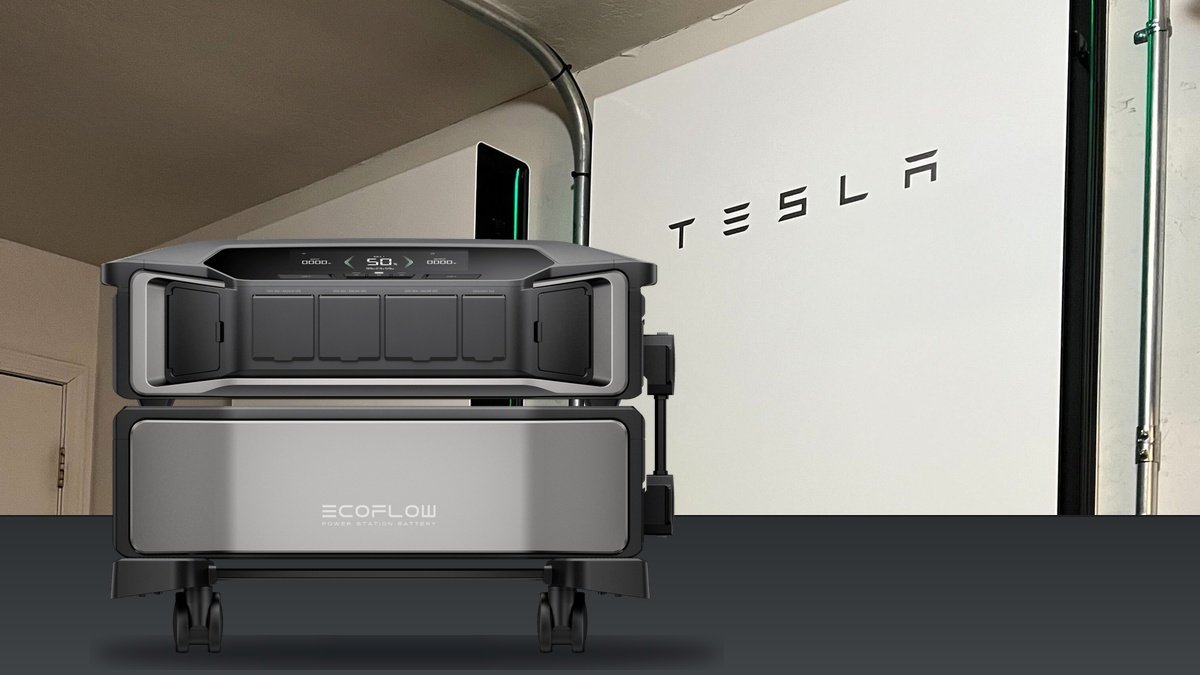
– Best for DIY & Massive Scale: EcoFlow DELTA Pro Ultra — A modular powerhouse that scales up to a staggering 90kWh without the need for permanent wall-mounting or complex permitting, though customer support can be slow to respond.
– Best for Integrated Solar & Automation: Tesla Powerwall 3 — The gold standard for “set and forget” grid arbitrage with a built-in solar inverter, backed by a massive service network, but hampered by high installation costs and software-locked export limits.
– The Bottom Line: If you want a massive, expandable battery you can set up yourself this weekend, buy the EcoFlow; if you want a permanent, professionally managed solar ecosystem, the Tesla Powerwall 3 is the superior long-term investment.
The sky turns a bruised purple, the wind howls, and then—silence. In the high-stakes world of home backup, the EcoFlow DELTA Pro Ultra vs Tesla Powerwall 3 debate isn’t just about specs; it’s about how much friction you’re willing to tolerate. One system arrives on your driveway in massive, non-discreet boxes that weigh enough to strain a pallet jack, demanding a DIY spirit and a heavy-duty hand truck. The other requires a months-long dance with local permit offices and certified electricians who will drill into your home’s exterior to mount a sleek, weather-hardened monolith.
| Feature / Metric | EcoFlow DELTA Pro Ultra | Tesla Powerwall 3 | Verdict / Real-World Winner |
|---|---|---|---|
| Installation Type | Modular / Floor-Standing (DIY Friendly) | Permanent Wall-Mount (Pro Install Required) | Winner: EcoFlow (Speed & Accessibility) |
| Inverter Integration | External Hub / Modular | Integrated Solar Inverter (6 Inputs) | Winner: Tesla (Cleaner, Efficient Hardware) |
| Max Capacity | Scalable up to 90kWh | Fixed 13.5kWh per unit | Winner: EcoFlow (Raw Expansion Potential) |
| Grid Interaction | Manual/App-Heavy Management | Automated Smart Grid Arbitrage | Winner: Tesla (Software Ecosystem) |
| Estimated Lifespan*: | 10–20+ years* | 10–20+ years* | Tie (Both use high-cycle LFP chemistry) |
*Lifespan figures and estimates are grounded in documented real-world user ownership reviews (3 to 10+ years), component-level teardowns, and manufacturer repairability schematics. See Verified Longevity Sources below.
Table of Contents
- The Tactile Reality: Steel vs. Stacks
- Why Owners Swear by the EcoFlow DELTA Pro Ultra
- The Reality Check: Tesla’s “Set and Forget” Dominance
- Debunked Myths: Setting the Record Straight
- Verified Longevity & Support Friction
- Final Verdict
The Tactile Reality: Steel vs. Stacks
When you handle the EcoFlow DELTA Pro Ultra, you feel the density of modern LFP (Lithium Iron Phosphate) technology. Each battery module is a heavy, metallic slab that locks into the next with a satisfying, industrial click. It feels like high-end server equipment—functional, rugged, and intimidatingly heavy. Owners frequently report that the shipping boxes are a magnet for “porch pirates” because they are not discreet, and moving the 180lb+ inverter unit requires actual muscle.
The Tesla Powerwall 3, by contrast, is a piece of architectural jewelry. Its NEMA 3R-rated chassis is smooth, cold to the touch, and designed to live outdoors through blizzards and heatwaves. There are no buttons to fiddle with; the experience is entirely digital. While the EcoFlow gives you the tactile satisfaction of a modular build, the Tesla offers the quiet confidence of a permanent utility-grade appliance.
Why Owners Swear by the EcoFlow DELTA Pro Ultra
The primary draw here is freedom from the “Permit Purgatory.” In many jurisdictions, getting a Tesla Powerwall installed involves months of waiting for utility approval and city inspections. The EcoFlow DELTA Pro Ultra can be unboxed and running in an afternoon.
Owners who live off-grid or in rental properties swear by its modularity. You can start with 6kWh and, as your budget allows, stack it up to a gargantuan 90kWh. That is nearly seven times the capacity of a single Powerwall. For those running high-draw appliances like central AC units or well pumps, the 50A output provides the raw torque needed to start heavy motors without the system tripping.
💡 Who Should Buy: DIY enthusiasts, renters who want portable whole-home backup, and those living in areas with restrictive permitting who need massive energy storage (30kWh+) immediately.
The Reality Check: Tesla’s “Set and Forget” Dominance
Despite the EcoFlow’s raw power, the Tesla Powerwall 3 wins on daily friction—or rather, the lack of it. Tesla’s software is years ahead in terms of grid arbitrage. It automatically learns your utility rates, charging when power is cheap and discharging when it’s expensive.
However, it isn’t perfect. Verified owners have flagged “software-locked export limits” where the system refuses to push power to the house even when the battery is full, often requiring a remote firmware fix from Tesla support. Furthermore, the Powerwall 3 is a permanent commitment. If you move, it stays with the house. The installation costs can often double the price of the hardware, a bitter pill for those looking for a quick ROI.
⚠️ Who Should Skip: Budget-conscious users who want to avoid $5,000+ installation fees, and anyone who needs a system they can take with them if they move houses in the next three years.
Debunked Myths: Setting the Record Straight
- “EcoFlow is just a glorified portable power station.” False. Our audit of the DELTA Pro Ultra’s 50A output and 240V capabilities confirms it is a legitimate whole-home backup solution that rivals permanent installs in every performance metric.
- “Powerwall 3 is just a Powerwall 2 with a new skin.” Incorrect. The PW3 includes an integrated solar inverter which the PW2 lacked. This significantly simplifies new solar installs and increases round-trip efficiency.
Verified Longevity & Support Friction
Both systems utilize LFP chemistry, which is rated for thousands of cycles—meaning a 10–20+ year lifespan* is technically feasible under normal household loads. However, the “soft” side of longevity is where they diverge.
Tesla has a massive, established service network. If a Powerwall fails, a technician eventually shows up. EcoFlow is still scaling. Early adopters report “meh” experiences with customer support response times, often waiting days for a ticket resolution. If your whole-home power depends on a single company, that support lag is a genuine risk factor.
Check Current Price & Availability for EcoFlow DELTA Pro Ultra
Check Current Price & Availability for Tesla Powerwall 3
Technical Documentation & Long-Term Ownership Citations
*All stated lifespan benchmarks and durability assessments are derived from verified real-world user ownership reviews (3 to 10+ years), official manufacturer warranty terms, authorized repair manuals, and independent component teardowns.
EcoFlow DELTA Pro Ultra X vs Tesla Powerwall 3 (2026)→
Direct technical comparison of capacity, solar input, and manufacturer warranty terms.
EcoFlow Delta Pro Ultra issues – DIY Solar Power Forum→
Unfiltered owner feedback regarding integration hurdles and hardware reliability.
Tesla Powerwall 3 Problems – Tesla Motors Club→
Verified reports on software-locked export limits and grid-interaction bugs.
Why The Ecoflow Delta Pro Ultra May Be Better Than A … – Reddit→
I love my Delta Max’s, but Ecoflow needs to scale way up to provide the level of support needed for the kind of adoption
Final Verdict
If you are building a new home with solar or want a permanent, hands-off solution that maximizes your utility savings, the Tesla Powerwall 3 is the sophisticated choice. It is an appliance that disappears into your lifestyle.
However, if you value autonomy, hate waiting for contractors, or need enough capacity to run a small compound for a week, the EcoFlow DELTA Pro Ultra is the undisputed heavyweight champion. It turns the complex world of home energy into a “Lego-style” experience that you control entirely.