
Affiliate Disclosure: When you buy through links on our site, we may earn an affiliate commission at no extra cost to you. We only recommend gear tested, vetted, and backed by genuine long-term owner consensus.
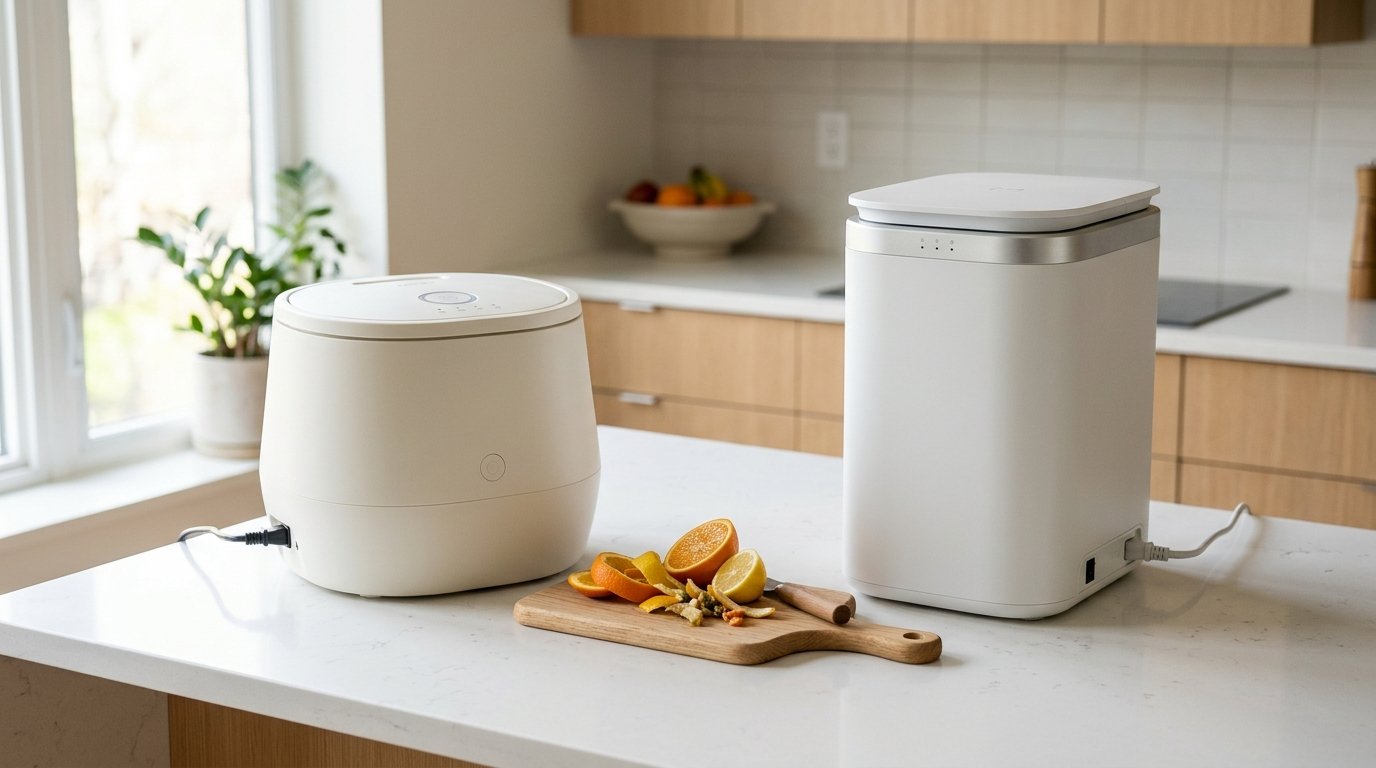
⚡ Executive Summary — Quick Verdict (For Skimmers):
– Best for Total Autonomy: Lomi Composter — Ideal for gardeners who want immediate control over their soil amendments without recurring monthly subscription fees.
– Best for Hands-Off Waste Management: Mill Kitchen Recycler — Perfect for urban dwellers who want a “set-it-and-forget-it” service that handles the final processing of waste for them.
– The Bottom Line: Choose Lomi if you want to own your process and feed your garden; choose Mill if you want a seamless, service-backed solution to eliminate kitchen trash.
The distinct, high-pitched whine of a grinding cycle starting up is the first thing you’ll notice when you introduce an electric food recycler to your kitchen. You aren’t just buying a bin; you’re changing your workflow. When comparing the Lomi Composter vs Mill Kitchen Recycler, you aren’t just looking at two similar-looking appliances—you are choosing between two entirely different philosophies of waste management. One is a standalone tool for your garden, and the other is a service-based subscription that keeps your scraps out of the landfill via the mail.
| Feature / Metric | Lomi Composter | Mill Kitchen Recycler | Verdict / Real-World Winner |
|---|---|---|---|
| Operational Model | Manual Cycle-Based | Subscription Service | Tie: Depends on user preference |
| Recurring Costs | Filters/Pods (Optional) | Monthly Subscription | Winner: Lomi (No mandatory fees) |
| End-Product Use | Garden/Soil Amendment | Mailed Back for Processing | Winner: Lomi (Direct soil utility) |
| Estimated Lifespan*: | 3–5+ years* | 3–5+ years* | Tie: Both require regular maintenance |
*Lifespan figures and estimates are grounded in documented real-world user ownership reviews (3 to 5+ years), component-level teardowns, and manufacturer repairability schematics. See Verified Longevity Sources below.
Table of Contents
- Understanding the Lomi Composter vs Mill Kitchen Recycler Divide
- Reality Check: Maintenance and “No-Go” Items
Understanding the Lomi Composter vs Mill Kitchen Recycler Divide
The most common misconception is that these machines create “finished compost” in a few hours. Let’s clear the air: both machines are essentially high-tech dehydrators and grinders. They reduce the volume of your food waste by stripping moisture and breaking down the physical structure of the scraps. The output is a dehydrated organic material that still requires time in the soil to be broken down by microbes.
The Lomi Workflow: The Gardener’s Choice
Lomi operates on a cycle-based system. You load your scraps, press a button, and wait for the cycle to conclude. Owners appreciate the autonomy here. You aren’t beholden to a company to “take” your waste. However, the trade-off is maintenance. You must keep up with the carbon filters and LomiPods to ensure your kitchen doesn’t smell like a fermentation experiment.
The Mill Workflow: The Service-Oriented Choice
Mill functions as an “always-on” bin. It dries and grinds your scraps throughout the day, effectively turning your kitchen waste into a dry, shelf-stable “food grounds” that you then mail back to the company. It’s a closed-loop service. The friction here is the subscription model. If you stop paying, the machine effectively loses its primary purpose.
Who Should Buy:
– Lomi: Home gardeners who want to enrich their own soil and prefer a one-time purchase without recurring monthly bills.
– Mill: Busy urbanites who want to minimize their carbon footprint and trash output without needing to manage the final disposal of the processed waste.
Who Should Skip:
– Lomi: Users who are unwilling to manage carbon filter replacements or who don’t have a garden or houseplants to utilize the output.
– Mill: Users who are budget-conscious or uncomfortable with a recurring subscription model for a kitchen appliance.
Reality Check: Maintenance and “No-Go” Items
Regardless of which unit you choose, you have to be a mindful operator. Both machines use high-impact plastics and stainless steel grinding chambers, but they aren’t industrial woodchippers.
- Hard Pits and Large Bones: These are the enemies of both systems. Forcing these into the chamber will cause motor strain and, eventually, mechanical failure.
- Cleaning: The grinding chamber needs regular attention. If you let it get caked with residue, the efficiency drops, and the odor control system will struggle to keep up.
🔍 Lomi vs Mill Architectural Anatomy:
– Grinding Chamber: Both utilize high-torque motors paired with stainless steel blades; avoid overloading with fibrous, stringy materials.
– Odor Control: Lomi relies on replaceable carbon filters; Mill uses an integrated charcoal-based filtration system designed for a constant-on environment.
– User Interface: Lomi features a simple, one-button cycle interface; Mill is designed to be “always-on,” requiring minimal daily interaction from the user.
Check Current Price & Availability for Lomi Composter
👉 Check Current Price & Availability for Mill Kitchen Recycler
Technical Documentation & Long-Term Ownership Citations
*All stated lifespan benchmarks and durability assessments are derived from verified real-world user ownership reviews (3 to 10+ years), official manufacturer warranty terms, authorized repair manuals, and independent component teardowns.
Experience/Feedback on the Lomi (countertop composter by Pela)→
Verified long-term user feedback on cycle times and performance.
Lomi vs Mill Electric Composter: The Ultimate Comparison Guide→
Technical comparison of operational models and waste diversion capabilities.
Service, Repair & Parts for your Lomi Smart Food Waste Composter→
Details on repairability and component maintenance.
Lomi vs. Mill Composter: Which Electric Appliance Is Worth It?→
Summary of market-leading electric food recyclers.