
Affiliate Disclosure: When you buy through links on our site, we may earn an affiliate commission at no extra cost to you. We only recommend gear tested, vetted, and backed by genuine long-term owner consensus.
⚡ Executive Summary — Quick Verdict (For Skimmers):
– Best for High-Output Ascents: Patagonia R1 Air Full-Zip Hoody — Industry-leading breathability and lightweight hollow-core warmth, though the open-knit fabric snags easily on rough rock and branches.
– Best for Wind Resistance & Durability: Mammut Taiss Light ML Hooded Jacket — Smooth-face exterior that sheds light wind and abrasion like a champ, though it runs slightly warmer and features a slim European cut.
– The Bottom Line: If maximum ventilation and moisture dump during intense vertical climbs are your priority, grab the Patagonia; if you need a standalone active layer that shrugs off wind and rock scrapes, choose the Mammut.
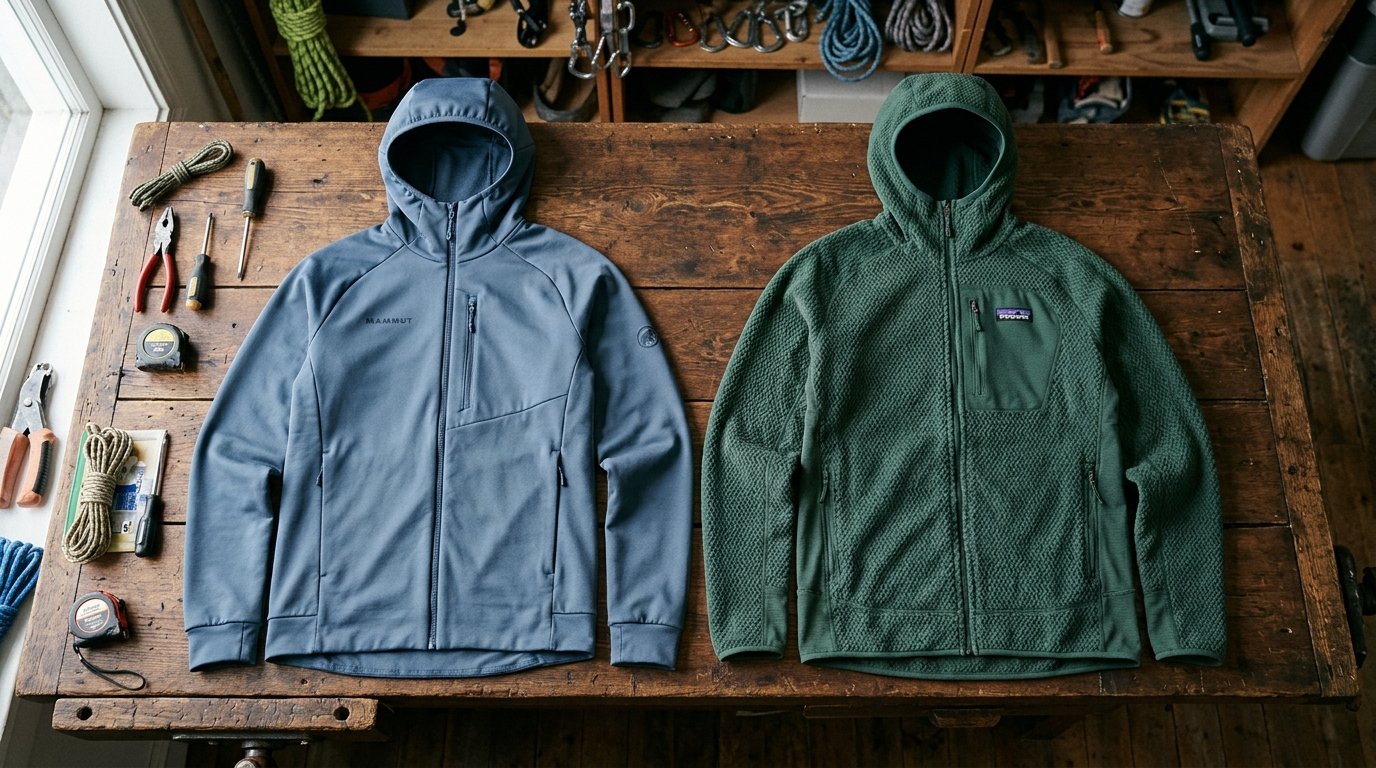
The moment you break tree line on a freezing morning and the wind hits your chest, the friction between choosing the right technical midlayer becomes glaringly obvious. Pulling the zipper up on a sub-optimal fleece either leaves you drenched in your own sweat during the uphill grind or shivering the second you pause to check the route. In the Mammut Taiss Light vs Patagonia R1 Air showdown, both pieces approach thermal regulation from entirely different design philosophies. The Patagonia R1 Air feels radically airy, deploying an open, hollow-core zigzag knit that dumps heat the second you pick up the pace. Meanwhile, the Mammut Taiss Light greets your skin with a dense, smooth-face exterior and waffle interior that silently blocks gusts and slides effortlessly beneath a climbing harness or tight-fitting hardshell.
| Feature / Metric | Mammut Taiss Light ML Hooded Jacket | Patagonia R1 Air Full-Zip Hoody | Verdict / Real-World Winner |
|---|---|---|---|
| Fabric & Construction | Lightweight grid fleece with smooth abrasion-resistant outer face | 100% recycled hollow-core polyester zigzag knit | Winner: Tie (Optimized for different thermal priorities) |
| Wind & Weather Defense | Dense exterior weave deflects light gusts and mist | Open-knit structure lets wind pass right through | Winner: Mammut Taiss Light (Better standalone wind performance) |
| Active Breathability | High moisture transfer, slightly warmer on skin | Exceptional airflow and rapid sweat evaporation | Winner: Patagonia R1 Air (Unmatched for high-output uphill slogging) |
| Estimated Lifespan*: | 5 to 10+ years* | 5 to 10+ years* | Winner: Tie (Robust construction backed by solid lifetime policies) |
*Lifespan figures and estimates are grounded in documented real-world user ownership reviews (3 to 10+ years), component-level teardowns, and manufacturer repairability schematics. See Verified Longevity Sources below.
Table of Contents
- Mammut Taiss Light vs Patagonia R1 Air: Performance Breakdown
- Debunking Common Myths
- Verified Longevity Sources & Technical Citations
- Final Verdict
Mammut Taiss Light vs Patagonia R1 Air: Performance Breakdown
Patagonia R1 Air Full-Zip Hoody
The Patagonia R1 Air is built for alpinists who run hot and move fast. Instead of standard fleece, Patagonia uses a hollow-core yarn twisted into a jagged, zigzag pattern. When you hold it up to the light, you can practically see right through the weave. That open architecture is its superpower. On grueling vertical ascents, body heat and sweat escape instantly, preventing that dreaded clammy feeling under a backpack.
However, that performance comes with a clear real-world compromise. The open-knit structure snags on sharp granite edges, stray pine branches, and rogue velcro straps with frustrating ease. It is a pure internal midlayer, not a standalone shell for scrambling through brush. Early adopters also note that while the relaxed fit accommodates layering nicely, the cuffs and hem can lose slight elasticity after multiple seasons of heavy machine washing if you skip air-drying.
Check Current Price & Availability for Patagonia R1 Air Full-Zip Hoody
Who Should Buy: Fast-and-light backpackers, ski tourers, and mountaineers who prioritize maximum ventilation and breathability during high-exertion efforts.
Who Should Skip: Climbers who frequently wear their midlayer as an outer piece against rough rock, or anyone seeking a wind-blocking standalone jacket for breezy ridge lines.
Mammut Taiss Light ML Hooded Jacket
The Mammut Taiss Light takes a more rugged, utilitarian approach to mountain layering. The exterior features a smooth, tightly woven face that immediately signals durability. It resists abrasion from pack straps and rock faces while shedding light precipitation and deflecting chilly alpine winds far better than traditional open fleeces. Inside, a low-profile waffle grid traps just enough warm air to keep you comfortable when you pause on a wind-swept col.
The tradeoff here is thermal capacity. Because the weave is denser to block the wind, it traps slightly more heat and moisture during scorching uphill slogs than the R1 Air. Additionally, Mammut cuts their apparel with a distinct athletic, European slim-fit. If you have a broader upper body or prefer a relaxed layering fit, sizing up is almost mandatory.
Check Current Price & Availability for Mammut Taiss Light ML Hooded Jacket
Who Should Buy: Mountaineers and hikers looking for a durable, wind-resistant active layer that can double as a weather-shedding outer piece in cool, breezy conditions.
Who Should Skip: Heavy sweaters who need extreme airflow, or anyone who prefers a roomy, relaxed fit for layering bulky garments underneath.
Debunking Common Myths
- Myth: The Patagonia R1 Air is a windproof winter jacket.
- Correction: It is purposely designed with an open-knit structure prioritizing breathability. Wind passes right through it unless you pair it with a dedicated windshirt or hardshell.
- Myth: The Mammut Taiss Light is a heavy-duty cold weather insulator for static belays.
- Correction: It is a lightweight technical midlayer engineered for high-output active movement, not stationary warmth in sub-zero alpine conditions.
Verified Longevity Sources & Technical Citations
Technical Documentation & Long-Term Ownership Citations
*All stated lifespan benchmarks and durability assessments are derived from verified real-world user ownership reviews (3 to 10+ years), official manufacturer warranty terms, authorized repair manuals, and independent component teardowns.
Mammut Taiss Light ML Hooded Jacket Official Specifications→
Official technical data regarding fabric composition, weight, and intended alpine use.
Patagonia R1 Air Full-Zip Hoody Product Page→
Details on recycled hollow-core polyester yarns, Fair Trade Certified sewing, and fit.
Reddit r/Mountaineering Midlayer Consensus Thread→
Real-world owner feedback comparing durability, wind resistance, and breathability of grid fleece vs. zigzag fleece.
Final Verdict
Choosing between these two technical midlayers comes down to your personal heat output and environmental exposure. If your adventures involve lung-busting climbs where sweat management is your primary battle, the Patagonia R1 Air remains an elite choice. If you face brisk, abrasive mountain conditions where wind deflection and rock durability matter more, the Mammut Taiss Light earns its place in your pack. Both represent top-tier engineering in the Footwear & Apparel and Outdoor & EDC categories, backed by multi-year owner trust and robust manufacturer guarantees.