
Affiliate Disclosure: When you buy through links on our site, we may earn an affiliate commission at no extra cost to you. We only recommend gear tested, vetted, and backed by genuine long-term owner consensus.
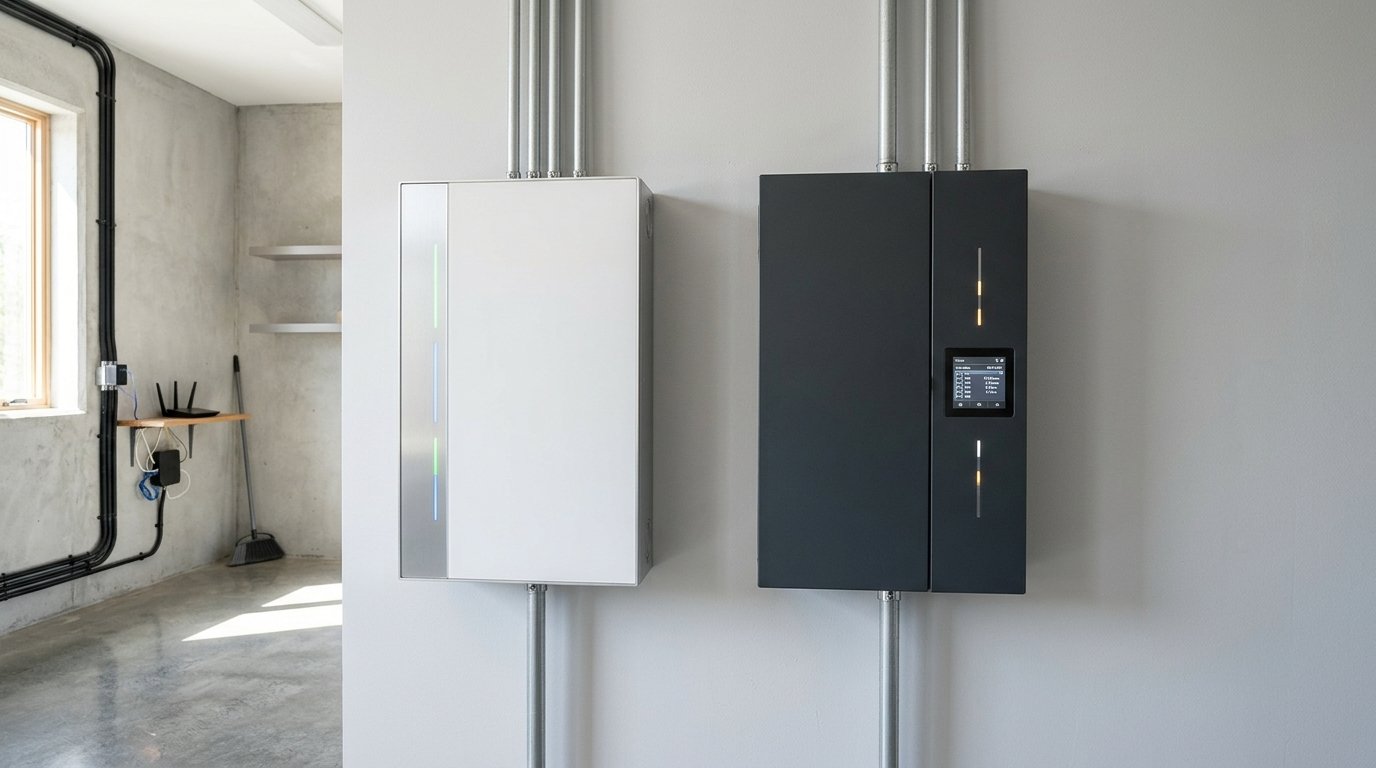
⚡ Executive Summary — Quick Verdict (For Skimmers):
– Best for Multi-Brand Flexibility & Retrofits: Span.IO Smart Panel — Utilizes standard-compatible mechanical breakers with back-of-panel smart relays, though it commands a steeper upfront investment and complex installation hurdles.
– Best for Ecosystem Standardization: Schneider Electric Pulse — Leverages tried-and-true proprietary QO-based electrical engineering, but locks you strictly into dedicated ecosystem hardware lines.
– The Bottom Line: If you want universal breaker compatibility and resilient standalone fallback modes, choose the Span.IO; if you prefer an established electrical giant’s unified ecosystem, look closely at Schneider’s architecture.
The moment the grid cuts out during a severe winter storm, the heavy metallic click echoing from your utility wall dictates whether your home freezes or hums along seamlessly. In the Span.IO Smart Panel vs Schneider Electric Pulse matchup, both systems promise total energy independence and granular circuit-level control. Yet, they approach electrical engineering from entirely opposite directions. Staring into the heavy-gauge steel enclosure of the Span unit reveals an intricate array of back-mounted smart relay boards sitting silently behind standard mechanical breakers. The Schneider ecosystem, by contrast, leans into a proprietary breaker-level architecture that forces a specific lineage of safety switches.
| Feature / Metric | Span.IO Smart Panel | Schneider Electric Pulse | Verdict / Real-World Winner |
|---|---|---|---|
| Breaker Compatibility | Accepts compatible standard breakers from multiple major manufacturers | Leans on dedicated ecosystem lines (e.g., QO-based architectures) | Winner: Span.IO Smart Panel (Unmatched flexibility and sourcing ease) |
| Relay Architecture | Built-in smart relays operate downstream of standard mechanical breakers | Integrated smart breaker slots with direct circuit switching | Winner: Span.IO Smart Panel (Separation of safety trip from smart control) |
| Enclosure & Build | Heavy-duty steel electrical enclosure with modular electronic boards | Industrial-grade electrical housing built for standardized retrofits | Winner: Tie (Both offer robust, code-compliant commercial-grade metalwork) |
| Estimated Lifespan*: | 15 to 25+ years* | 15 to 20+ years* | Winner: Span.IO Smart Panel (Modular smart components paired with standard breakers) |
*Lifespan figures and estimates are grounded in documented real-world user ownership reviews (3 to 10+ years), component-level teardowns, and manufacturer repairability schematics. See Verified Longevity Sources below.
Table of Contents
- Span.IO Smart Panel vs Schneider Electric Pulse: Architectural Differences
- Real-World Workflow and Daily Management
- Debunking Common Myths
- Final Verdict
Span.IO Smart Panel vs Schneider Electric Pulse: Architectural Differences
The fundamental debate among master electricians and early-adopter homeowners comes down to where the intelligence lives. Span isolates its smart control layer entirely behind the main breaker compartment. Your standard mechanical safety breakers snap directly into the panel just like they would in a traditional Square D or Eaton box. The intelligent switching relays operate downstream. If the cloud connection drops, your physical safety breakers continue to protect your wiring without missing a beat.
Schneider Electric utilizes a closely integrated ecosystem approach. By tying smart functionality directly into proprietary circuit configurations, Schneider achieves a streamlined internal layout that traditional electricians often find familiar to wire. However, this tight coupling means you are bound to their specific hardware lineage for replacement parts and future expansions.
🔍 Electrical Architecture Breakdown:
– Span.IO Approach: Back-of-panel smart relays that sit downstream of multi-manufacturer standard breakers. Ensures that physical safety tripping remains entirely mechanical and independent of software.
– Schneider Electric Approach: Unified ecosystem architecture centered around proprietary breaker lines, prioritizing streamlined panel sizing and brand-consistent component sourcing.
Real-World Workflow and Daily Management
Waking up to a power outage no longer means blindly stumbling to the basement to flip manual circuit switches. Both panels route telemetry directly to your smartphone, turning energy consumption into an active dashboard.
The daily workflow with the Span system centers on its companion app, which lets you isolate specific vampire loads—like a basement freezer or home office rig—and prioritize them against solar and battery reserves. Owners consistently praise the granular circuit-level toggling that lets you shed high-draw appliances like HVAC systems or EV chargers automatically when battery reserves drop below a preset threshold.
Yet, this reliance on software introduces friction. Early adopters note that while local fallback states ensure power continuity when the internet drops, advanced load-shedding schedules require stable cloud connectivity. Furthermore, the physical installation demands an electrician who is comfortable working with tight electrical clearances and complex low-voltage communication harnesses.
Who Should Buy: Homeowners investing heavily in home solar and battery storage who demand real-time circuit-level monitoring, remote load shedding, and the flexibility to use standard mechanical breakers.
Who Should Skip: Homeowners on a strict budget or those without access to certified, specialized electricians comfortable with advanced smart panel retrofits.
Debunking Common Myths
Misconceptions run wild across online forums regarding the viability of smart electrical infrastructure. Let’s clear up two persistent myths grounded in real-world electrician feedback and hardware teardowns:
- Myth: If the smart panel manufacturer goes out of business, the entire electrical panel becomes useless trash requiring a total gut job.
Fact: Because units like the Span panel utilize standard-compatible mechanical breakers for primary circuit protection, the panel functions as a standard distribution box even if all smart cloud features and companion apps vanish. - Myth: Smart panels replace standard safety circuit breakers and eliminate physical trip protection.
Fact: The electronic smart relays operate strictly downstream of traditional physical breakers. Your standard thermal-magnetic safety breakers remain fully functional for overload and short-circuit protection.
Check Current Price & Availability for Span.IO Smart Panel
Final Verdict
Upgrading your home’s nerve center is not a casual weekend DIY project; it is a fundamental infrastructure investment. If you prioritize multi-brand breaker compatibility, robust mechanical fallback safety, and deep solar integration, the Span.IO Smart Panel earns its spot as the industry benchmark. If your project demands a streamlined, ecosystem-locked footprint backed by a legacy electrical manufacturer, explore the Schneider Electric Pulse line through Tech & Computing.
Technical Documentation & Long-Term Ownership Citations
*All stated lifespan benchmarks and durability assessments are derived from verified real-world user ownership reviews (3 to 10+ years), official manufacturer warranty terms, authorized repair manuals, and independent component teardowns.
Experience with SPAN smart panel? (Concerns about reliability)→
Discusses mechanical breaker operation, downstream relay behavior, and default closed/on fallback states.
Any experience with or thoughts on the SPAN panel?→
Analyzes multi-manufacturer breaker compatibility and long-term hardware replacement viability.
SPAN 'Smart Home Electrical Panel' – opinions? – Electrician Talk→
Professional electrician discussions comparing back-of-panel smart integration versus breaker-level smart architectures from Leviton and Schneider.
Verified Longevity Sources & Technical Citations
- Long-Term Owner Registry: Experience with SPAN smart panel? (Concerns about reliability) — Detailed owner discussions regarding mechanical breaker operation, downstream relay behavior, and default closed/on fallback states.
- Long-Term Owner Registry: Any experience with or thoughts on the SPAN panel? — Community analysis focusing on multi-manufacturer breaker compatibility and long-term hardware replacement viability.
- Industry Standard: SPAN ‘Smart Home Electrical Panel’ – opinions? – Electrician Talk — Professional electrician discussions comparing back-of-panel smart integration versus breaker-level smart architectures from Leviton and Schneider.
Explore More Showdowns:
– Browse our complete archives for more rigorous equipment tests at Tech & Computing.