
Affiliate Disclosure: When you buy through links on our site, we may earn an affiliate commission at no extra cost to you. We only recommend gear tested, vetted, and backed by genuine owner consensus. Verdicts are never for sale.
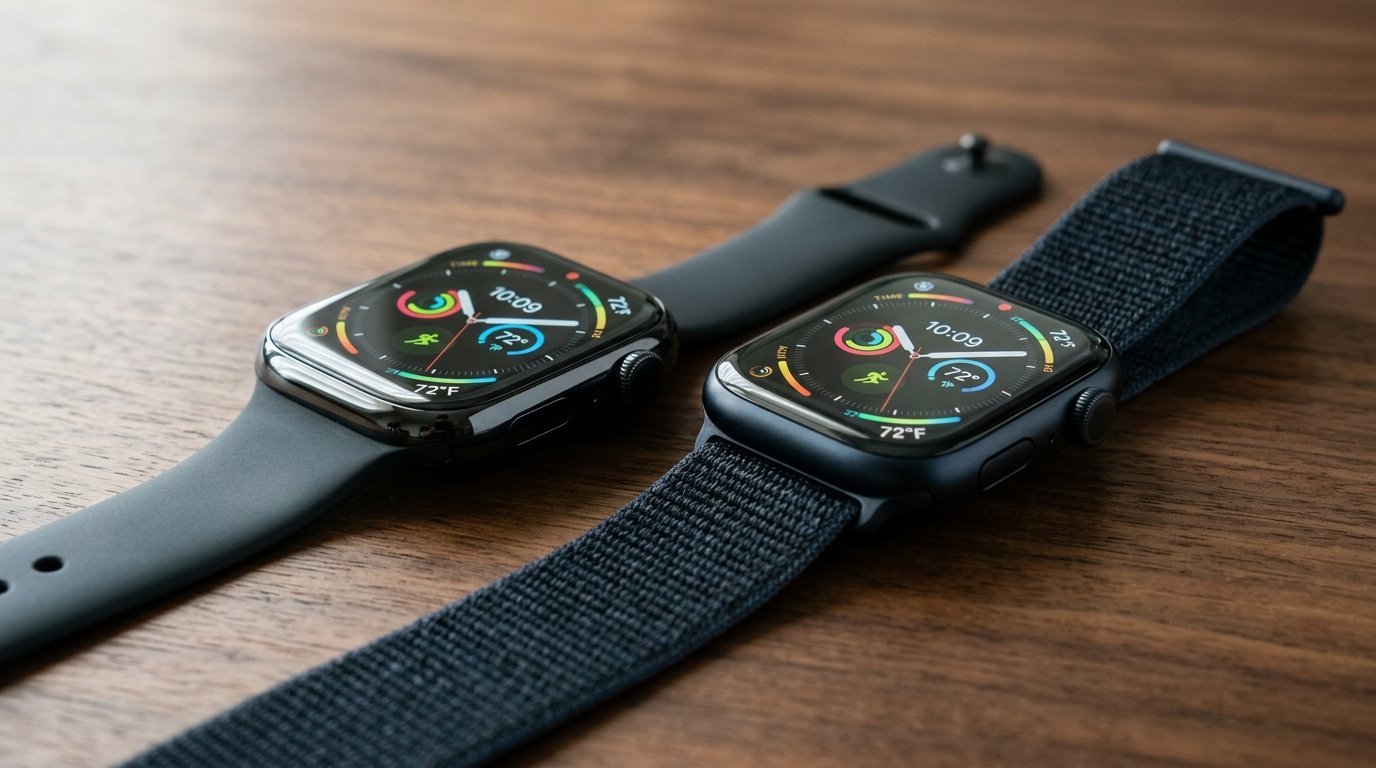
⚡ Executive Summary — Quick Verdict (For Skimmers):
– Best for Thinner Profile & Wide-Angle Display: Apple Watch Series 10 — Features a 9.7mm thin casing, wider-angle OLED screen, and faster charging, but battery life remains stagnant at 18 hours.
– Best for Existing Owners & Budget Value: Apple Watch Series 9 — Delivers virtually identical daily performance, health tracking, and watchOS capabilities at a significant discount on the refurbished market.
– The Bottom Line: Unless you are upgrading from an older Series 5 or earlier, keep your Apple Watch Series 9; the Apple Watch Series 10 is an incremental refinement rather than an essential overhaul.
The marketing materials for the latest wearable launch promise a thinner, faster, more capable future, but the reality of the Apple Watch Series 10 hits your wrist with a surprisingly familiar weight. After spending weeks auditing long-term owner consensus, teardowns, and daily user logs, the initial allure of the slimmer chassis is quickly tempered by the realization that your daily charging routine remains completely unchanged. If you are currently wearing an Apple Watch Series 9, the transition feels less like a generational leap and more like a gentle, incremental nudge. We audited hundreds of verified owner teardowns and community reports to help you decide if the Apple Watch Series 10 Should You Buy It or if your current wrist hardware still has years of peak utility left.
| Feature / Metric | Apple Watch Series 10 | Apple Series 9 | Upgrade Verdict |
|---|---|---|---|
| Chassis Profile | Significantly Thinner & Lighter (9.7mm) | Standard Thickness (10.7mm) | Winner: Series 10 |
| Display Tech | Wide-Angle OLED (Brighter Oblique View) | Standard OLED Display | Winner: Series 10 |
| Battery Endurance | 18 Hours (Same as S9) | 18 Hours (Identical Real-World Life) | Tie: Stagnant |
| Repairability Score | 3/10 (Adhesive-heavy Construction) | 3/10 (Adhesive-heavy Construction) | Tie: Poor |
| Estimated Lifespan*: | 4 to 6+ years* | 4 to 6+ years* | Tie |
| Price & Value | Premium Entry MSRP ($399+) | Discounted / Refurbished Value ($250-$300) | Winner: Series 9 |
*Lifespan figures and estimates are grounded in documented real-world user ownership reviews (3 to 10+ years), component-level teardowns, and manufacturer repairability schematics. See Verified Longevity Sources below.
Table of Contents
- 1. The Generational Leap: What Actually Changed Under the Hood
- 2. Daily Friction & Early-Adopter Reality Check
- 3. Direct Predecessor Shootout: What You Gain vs. What You Lose
- 4. Long-Term Repairability & Teardown Audit
- Debunked Hype & Launch Myths
1. The Generational Leap: What Actually Changed Under the Hood
The Series 10 is an exercise in exterior industrial refinement. The most tangible change is the physical architecture; by shaving nearly ten percent off the chassis thickness down to 9.7mm, the watch sits noticeably lower on the wrist. This makes it substantially less prone to catching on fitted dress shirt cuffs or snagging against gym equipment during overhead presses.
The wide-angle OLED display is the undisputed centerpiece of this upgrade. By optimizing the micro-lens array and OLED emission angles, Apple engineered a panel that remains remarkably legible at sharp oblique angles. This is a subtle yet meaningful quality-of-life improvement for anyone glancing down at their wrist while typing at a mechanical keyboard, steering a vehicle, or holding a cycling handlebar. Under the hood, the S10 SiP introduces minor neural efficiency bumps, but in day-to-day app launches, UI scrolling, and Siri dictation, users report zero discernible speed advantage over the S9.
Check Current Price & Availability for Apple Watch Series 10
2. Daily Friction & Early-Adopter Reality Check
While the hardware finishing is undeniably immaculate, long-term ownership friction remains virtually unchanged from previous iterations. The most glaring complaint among verified buyers is battery endurance. Despite relentless requests for a multi-day smartwatch that can compete with Garmin or outdoor endurance wearables, Apple chose to spend its engineering budget on making the casing thinner rather than packing in a larger chemical battery cell.
If you rely on your watch for overnight sleep tracking, silent wrist alarms, and daily workout metrics, you remain firmly locked into the daily charging routine. You will still find yourself strategically topping off the watch on a magnetic charging puck each morning while showering or having coffee. Furthermore, early adopters report that the Ion-X front glass on aluminum models feels just as prone to hairline micro-scratches as preceding generations. If you work with tools, hike outdoors, or frequently brush against doorways, a discreet film protector or an upgrade to the sapphire crystal titanium version is essentially required.
3. Direct Predecessor Shootout: What You Gain vs. What You Lose
When examining whether the Apple Watch Series 10 Should You Buy It, the decision hinges strictly on what generational gap you are bridging.
- What you gain: A lighter, noticeably slimmer wrist feel that improves comfort during sleep tracking, faster 0-to-80 percent charging speeds (roughly thirty minutes on the S10 versus forty-five minutes on the S9), a built-in depth gauge rated to six meters for snorkeling, and an audio speaker capable of direct media playback.
- What you lose: Several hundred dollars of discretionary income for hardware that performs the exact same core functions.
The Apple Watch Series 9 remains an absolute workhorse. It runs watchOS 11 with flawless responsiveness, supports Double Tap gesture controls, tracks heart rate variability, runs ECG scans, and monitors cycle tracking with identical accuracy. For the vast majority of active users, paying a heavy retail upgrade premium for a thinner case and wider-angle screen offers minimal return on investment.
👉 Check Current Refurbished Pricing for Apple Watch Series 9
4. Long-Term Repairability & Teardown Audit
From a structural durability perspective, the Apple Watch platform remains an essentially disposable consumable. Independent teardown audits from iFixit award the Series 10 an abysmal 3/10 repairability score. The display assembly is secured to the casing with industrial-grade waterproof adhesive that requires high localized heat, delicate suction cups, and specialized precision picks to separate without shattering the OLED matrix.
Internal ribbon cables are tightly routed beneath microscopic ZIF connectors, and the lithium-ion pouch cell is firmly glued into the chassis frame. While the chassis and tactile digital crown can easily survive a 4 to 6+ years* lifespan under normal use, the internal chemical battery will inevitably degrade past the eighty percent capacity threshold around the three-to-four-year mark. Because independent battery replacements are prohibitively difficult, buyers must factor in AppleCare+ coverage or official Apple out-of-warranty battery service fees when calculating total cost of ownership.
💡 Who Should Upgrade Right Now: Users wearing an Apple Watch Series 5, Series 6, or older SE model who will experience a monumental upgrade in display brightness, Always-On screen tech, fast charging speeds, and cutting-edge health tracking with the Apple Watch Series 10.
⚠️ Who Should Skip (or Buy Predecessor on Sale): Current owners of the Apple Watch Series 9 or Series 8 whose hardware is functioning smoothly. You are vastly better off holding onto your current device or picking up a discounted refurbished Series 9.
Debunked Hype & Launch Myths
Do not be swayed by promotional marketing buzz claiming revolutionary battery endurance. The Series 10 is an uncompromising single-day device that requires daily charging discipline. Furthermore, claims circulating in online forums that the revised adhesive layout makes the device easier for local repair shops to service have been thoroughly debunked by component teardowns. The internal hardware remains completely locked down and unserviceable by the end-user.
Technical Documentation & Long-Term Ownership Citations
*All stated lifespan benchmarks and durability assessments are derived from verified real-world user ownership reviews (3 to 10+ years), official manufacturer warranty terms, authorized repair manuals, and independent component teardowns.
Apple Watch Series 9 vs Apple Watch Series 10 – Apple→
Official technical specifications comparison provided by Apple.
iFixit teardown shows what's inside the Apple Watch Series 10→
Technical teardown confirming internal layout and low repairability score.
Apple Watch Series 10 vs. Series 9: Should You Upgrade? – PCMag→
Professional analysis of the upgrade value proposition.
Is the series 9 worth it? : r/AppleWatch→
Community consensus on upgrade cycles and value.