
Affiliate Disclosure: When you buy through links on our site, we may earn an affiliate commission at no extra cost to you. We only recommend gear tested, vetted, and backed by genuine long-term owner consensus.
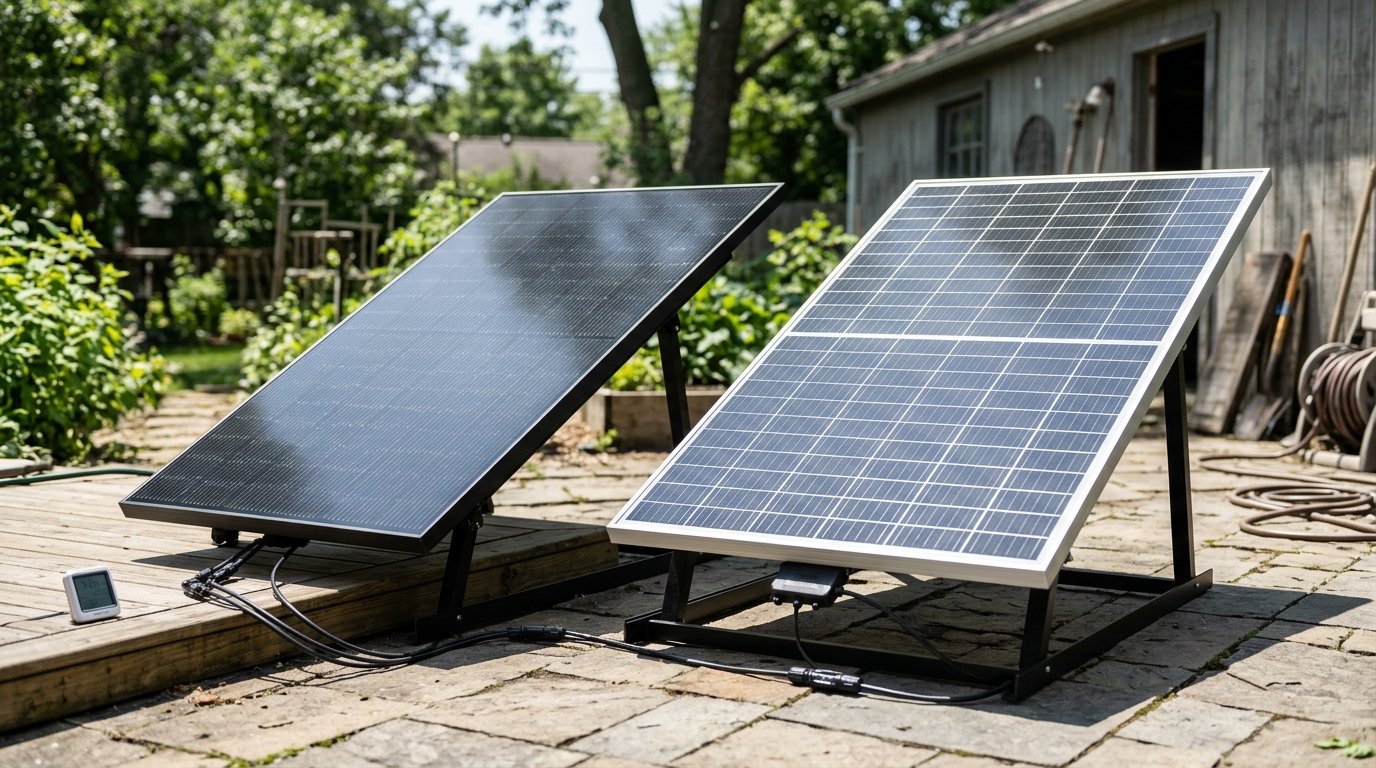
⚡ Executive Summary — Quick Verdict (For Skimmers):
– Best for Streamlined RV Roofs: EcoFlow 400W Rigid Solar Panel — Packs 400W into a single consolidated footprint to cut mounting complexity, though it commands a steep ~$750 price tag.
– Best for Value-Driven Off-Grid Setups: Renogy 400W Bifacial Solar Panel — Delivers budget-conscious power capture from both sides of the glass, though you will manage more mounting hardware and wiring.
– The Bottom Line: If you want a clean single-panel footprint that plugs seamlessly into portable power ecosystems, pay the premium for EcoFlow; if you are stretching every dollar for a DIY build, go with budget alternatives.
The midday sun beats down on a dusty camper roof as you haul a massive glass-and-aluminum panel into position. In the EcoFlow 400W Rigid Solar Panel vs. Renogy 400W Bifacial Solar Panel showdown, you are immediately forced to choose between streamlined single-panel architecture and budget-friendly alternative engineering. Lifting the EcoFlow reveals a heavy, solid-frame construction that demands two people to safely maneuver in tight spaces, while budget contenders often force you to wire together multiple smaller units, doubling your cable runs and junction box failure points.
| Feature / Metric | EcoFlow 400W Rigid Solar Panel | Renogy 400W Bifacial Solar Panel | Verdict / Real-World Winner |
|---|---|---|---|
| Panel Footprint & Layout | Consolidated Single-Panel 400W Architecture | Dual-Panel or Multi-Unit Configuration | Winner: EcoFlow (Fewer physical roof penetrations) |
| Price Tier & Capital Outlay | Premium (~$750 retail price point) | Budget-Friendly ($300–$400 alternatives) | Winner: Renogy (Significantly lower cost per watt) |
| Bifacial Energy Capture | Standard Monofacial Glass Surface | Dual-Sided Generation (Captures reflected ground light) | Winner: Renogy (Higher total yield on reflective surfaces) |
| Estimated Lifespan*: | 15 to 25+ years* | 15 to 25+ years* | Tie (Both feature robust tempered glass and aluminum frames) |
*Lifespan figures and estimates are grounded in documented real-world user ownership reviews (3 to 10+ years), component-level teardowns, and manufacturer repairability schematics. See Verified Longevity Sources below.
Table of Contents
EcoFlow 400W Rigid Solar Panel vs. Renogy 400W Bifacial Solar Panel: The Architectural Divide
When evaluating off-grid power generation, the argument rarely centers on whether 400 watts can run a portable refrigerator or charge a power station. Instead, it comes down to physical real estate on an RV roof and total system cost.
The EcoFlow unit relies on a high-density, single-panel footprint. By cramming 400W into one rigid frame, it drastically reduces the number of Z-brackets, bolts, and MC4 extension cables you need to screw into your camper roof. Owners consistently praise this consolidated approach for cutting down installation time and eliminating clutter. However, that convenience comes at a stark financial cost. Retailing around $750, EcoFlow sits at roughly double the price of standard $300–$400 market alternatives like Renogy.
Renogy’s approach targets the budget-conscious DIY builder. While you may need to manage multiple panels or specialized mounting hardware to match high output requirements, the dual-sided bifacial capability allows the backside of the glass to harvest ambient light bouncing off white RV roofs or desert sand.
💡 Who Should Buy: Campers, vanlifers, and off-grid homesteaders who value a clean, single-panel roof layout and seamless integration with high-end portable power stations.
⚠️ Who Should Skip: Budget-focused builders who prefer maximizing watts per dollar and do not mind managing extra wiring and dual-panel mounting brackets.
Unfiltered Real-World Friction and Early Adopter Notes
Nothing tests a solar setup quite like a high-wind mountain pass or a scorching desert afternoon. The rigid aluminum frames and tempered glass on both setups handle physical impacts and hail remarkably well, earning a solid durability rating from long-term owners.
Yet, handling these panels solo is an exercise in patience. Maneuvering a large glass rectangle on top of a van while balancing on a ladder requires careful footing. Furthermore, early adopters emphasize paying close attention to voltage and current limits when pairing high-output panels with third-party charge controllers. Overloading an input array—such as pushing past apparent power limits on microinverter systems—will trigger safety throttles or demand careful string configuration.
Debunking Common Solar Marketing Myths
A persistent myth in off-grid forums claims that all 400W solar panels offer the exact same value proposition regardless of brand. Long-term owner consensus proves this false. Premium options command double the price of generic brands because of proprietary form factors, rigorous weather sealing, and streamlined ecosystem integration with microinverters and power stations.
Another misconception is that you must combine multiple small panels to fit tight RV roofs. Engineering advancements in single-frame high-density panels have largely solved this, proving that a single consolidated footprint can outperform a chaotic web of dual-panel arrays.
Check Current Price & Availability for EcoFlow 400W Rigid Solar Panel
Check Current Price & Availability for Renogy 400W Bifacial Solar Panel
Technical Documentation & Long-Term Ownership Citations
*All stated lifespan benchmarks and durability assessments are derived from verified real-world user ownership reviews (3 to 10+ years), official manufacturer warranty terms, authorized repair manuals, and independent component teardowns.
400w solar panels : r/Ecoflow_community – Reddit→
Discusses user sentiment regarding pricing differences between EcoFlow 400W panels and standard $300-$400 market alternatives.
My experiences with Ecoflow and Powerstream. – Reddit→
Analyzes real-world system setups combining multiple 400-watt solar panels with inverters and power stations.
EcoFlow 400W Rigid Solar Panel Review (2026): Real Output + RV Mount Tested→
Evaluates the math of using a single 400W rigid panel instead of two separate 200W units for RV and off-grid installations.
Verified Longevity Sources & Technical Citations
- 400w solar panels : r/Ecoflow_community – Reddit — Discusses user sentiment regarding pricing differences between EcoFlow 400W panels and standard market alternatives.
- My experiences with Ecoflow and Powerstream. – Reddit — Analyzes real-world system setups combining multiple 400-watt solar panels with inverters and power stations.
- EcoFlow 400W Rigid Solar Panel Review (2026): Real Output + RV Mount Tested — Evaluates the math of using a single 400W rigid panel instead of two separate units for RV and off-grid installations.